The Ultimate New Kitten Care Guide: How to Raise a Happy, Healthy Kitten
Welcome to kitten parenthood. Deep breath. You’re about to experience one of the most chaotic, exhausting, and genuinely magical chapters of pet ownership.
Raising a kitten is wildly rewarding — but it’s also full of moments where you’ll find yourself Googling “is this normal” at 2 a.m. while a tiny creature attacks your ankle. I’ve been there. Many times. This kitten care guide is built to be the resource I wished I’d had on day one.
Whether you’ve just adopted an 8-week-old kitten from a shelter, you’ve stumbled into the world of bottle-feeding a newborn, or you’re preparing your home for the new family member arriving next week, this complete handbook walks you through every stage of those crucial first six months.
A quick reminder before we dive in: I’m not a veterinarian, and nothing here replaces real veterinary care for your kitten. Especially for newborns and very young kittens, working closely with a vet isn’t optional — it’s essential. Where things get medical or risky, I’ll say it straight: call the vet. They’re the right people for those calls.
Let’s get into it.

Quick Reference: Week-by-Week Kitten Milestone Timeline
- Week 1 (Newborn): Eyes closed, ears folded, can’t regulate temperature, can’t urinate without stimulation. Feeds every 2 hours.
- Week 2: Still helpless, weight should be doubling. Eyes may begin to open by day 10–14.
- Week 3: Eyes fully open (initially blue), ears uncurl, first wobbly steps, first baby teeth.
- Week 4: Walking improves, beginning to play with littermates, starting to use litter box instinctively.
- Weeks 5–6: Weaning begins, transitioning to gruel and then solid food. Litter box training in progress.
- Weeks 7–8: Fully weaned, ready for first vet visit. Socialization window peaks.
- Weeks 9–12 (Months 2–3): Typical adoption age. Vaccination series begins. Boundary-setting time.
- Months 4–5: Rapid growth phase. Discussions with vet about spay/neuter timing.
- Month 6: Approaching adult size for smaller breeds. Continued growth for larger breeds.
This timeline is a general framework. Every kitten develops at their own pace — these are guidelines, not deadlines.
Essential Checklist: Preparing for Your New Kitten
Before your kitten comes home, having the right setup makes everything smoother. Kittens are tiny, curious, and surprisingly good at finding trouble — so a little prep on the front end saves you a lot of stress later.
This section is for first-time kitten owners adopting a kitten that’s already weaned (usually around 8 weeks old). If you’ve ended up with a much younger kitten — especially a newborn or abandoned kitten — scroll down to the neonatal section. Your prep list looks very different.
The New Kitten Supply Checklist
Here’s what I’d consider genuinely essential. Anything more is bonus.
Food and feeding:
- High-quality kitten-specific food (look for “AAFCO-formulated for growth” on the label)
- Shallow food and water bowls — ceramic or stainless steel hold up best
- A water fountain if your kitten seems uninterested in still water (many kittens are)
Litter setup:
- A shallow litter box (high sides make it hard for tiny legs)
- Unscented, low-dust litter — clay non-clumping is often recommended for very young kittens, since clumping clay can be harmful if ingested
- A scoop and a small mat to catch tracking
Comfort and safety:
- A cozy bed in a quiet corner
- A carrier for the trip home and vet visits
- A pheromone diffuser like Feliway can help reduce stress in the first weeks
Enrichment and training:
- A sturdy scratching post (vertical and horizontal both ideal)
- Wand toys for interactive play
- A few safe solo toys — soft, kitten-sized, no small detachable parts
- Optional: a cat tree (great investment if you have space)
Health basics:
- A reputable veterinarian lined up before you bring the kitten home
- A folder for vet records, vaccination history, and microchip info
For a detailed breakdown of every essential item with brand recommendations, see our [Best Kitten Starter Kit Essentials →] over in [Kitten Feeding & Care].

Kitten-Proofing Your Home
Kittens are explorers. Tiny, fearless, fast explorers. Before bringing one home, walk through your space looking at it the way a curious six-inch-tall creature would.
Common kitten dangers to address:
- Electrical cords — kittens love to chew, and live cords are dangerous. Cord covers or tucking cords away helps.
- Toxic plants — lilies are particularly dangerous to cats, but many common houseplants are also toxic. The ASPCA maintains a comprehensive list at aspca.org.
- Small spaces — kittens can squeeze into surprisingly tiny gaps. Block off behind appliances, under furniture, and any wall openings.
- Toilet lids — keep them closed. Tiny kittens have drowned in toilet bowls.
- Open windows and balconies — even screened windows can fail. “High-rise syndrome” is a real veterinary term.
- Chemicals, medications, and human food — secure all of it. Many human foods (chocolate, onion, garlic, grapes, xylitol) are toxic to cats.
- String, ribbon, hair ties, rubber bands — kittens love them, but ingested string can cause serious intestinal blockages.
How to Raise a Kitten in an Apartment (or When You Work All Day)
If you live in a small space or you’re gone for long stretches during the day, kitten-proofing a designated safe room is one of the smartest moves you can make. A bathroom or small bedroom set up with food, water, litter box, bed, toys, and scratching post becomes your kitten’s secure home base for the first few days.
Some practical tips for apartment-based or working kitten parents:
Use vertical space. Apartments may be small horizontally, but vertical real estate adds up fast. Cat trees, window perches, and wall-mounted shelves give your kitten room to expand without taking up your floor.
Rotate enrichment. Three toys put out today, three different ones tomorrow — the novelty keeps things engaging. Puzzle feeders are gold for working kitten parents.
Consider adopting a bonded pair. Two kittens entertain each other in ways one kitten and a human cannot. They wrestle, chase, nap together, and burn off energy as a team. Many shelters strongly encourage adopting in pairs for this exact reason.
Bookend your work day with play. A vigorous 10-minute play session before you leave and another when you get home goes a long way toward burning kitten energy.
For more on indoor enrichment specifically, head over to our [Kitten Sleep & Play] section.

Special Considerations for Popular Breeds
If you’re bringing home a specific breed, here are quick notes on what to be prepared for:
Maine Coon kittens grow slowly — sometimes up to 4–5 years to reach full size — and benefit from longer kitten-formula feeding. Their coats stay manageable as kittens but need brushing routines established early so they tolerate grooming as adults.
Ragdoll kittens are typically gentle, slow to mature, and bond strongly with humans. Their semi-long coat doesn’t fully develop until later, so grooming demands grow over time. Many Ragdoll owners describe them as “dog-like” in their friendliness.
Bengal kittens are extraordinarily high-energy. They need serious enrichment, multiple daily play sessions, and a cat tree from day one. Bengals also tend to love water — don’t be surprised if your bathtub becomes a favorite spot.
Persian kittens need brushing from the very beginning, daily, to establish tolerance for grooming. Their flat face also means more attention to eye cleaning — a soft damp cloth daily helps prevent tear staining.
Siamese kittens are vocal, social, and often thrive with a feline companion. They form intense bonds with their humans and aren’t shy about telling you exactly what they think.
For breed-specific deep dives — including Ragdoll, Bengal, Maine Coon, Persian, and Siamese care — explore our [Cat Breeds Hub →].
How to Care for Newborn Kittens (Weeks 1–4)
Important note up front: This section is for general awareness, not a substitute for professional veterinary guidance. Neonatal kittens — those under 4 weeks — are extremely fragile. Mortality rates in this stage are real, and the difference between thriving and not often comes down to factors only a vet can assess.
If you’ve suddenly found yourself responsible for newborn, abandoned, or orphaned kittens, please contact a veterinarian or experienced kitten rescue organization immediately. CatNap Academy is an educational resource — not a replacement for hands-on medical support during these critical weeks.
That said, here’s what to understand about newborn kitten care, so you can make informed decisions and know when to ask for help.

How to Care for a 1 Week Old Kitten
A one-week-old kitten weighs roughly 4 ounces — about the weight of a deck of cards. Their eyes are sealed shut, their ears are folded, and they can’t regulate their own body temperature. They cannot urinate or defecate on their own. They are entirely dependent on their mother — or on a human caregiver if their mother isn’t available.
The three things that matter most in week one:
- Warmth. Newborn kittens chill dangerously fast. Their environment needs to stay around 85–90°F in the first week. A heating pad set to low and placed under half the bedding (so the kitten can move off if too warm) is one common approach, but specifics should always be guided by a vet or experienced rescue.
- Nutrition every 2 hours, around the clock. The only appropriate food for newborn kittens is kitten milk replacer (KMR), available at most pet stores. Never give a kitten cow’s milk. Cow’s milk causes severe digestive distress in kittens and can be fatal. Bottle-feeding mechanics — angle, position, amount, how often to burp — really do need hands-on guidance. Your vet or a kitten rescue can walk you through it.
- Stimulated elimination. Newborn kittens can’t urinate or defecate without stimulation, which a mother normally provides by licking. In her absence, this needs to be manually stimulated by gently rubbing the kitten’s lower belly and genital area with a warm, damp cloth after each feeding. This isn’t optional — kittens who can’t eliminate become very sick very quickly.
How to Care for a 2 Week Old Kitten
By week two, kittens should be doubling their birth weight. The signs that things are going well: steady weight gain, regular feeding, normal elimination after each meal, and active suckling response.
What changes in week two:
- Eyes may start to open, usually between days 10 and 14. They’ll be cloudy and blue at first.
- Ears begin to uncurl and hearing develops.
- Kittens become slightly more aware of their surroundings.
- Feeding intervals can sometimes stretch to every 3 hours by the end of week two.
Warmth, nutrition, and stimulated elimination remain critical. This is still a round-the-clock job.
If you’re caring for orphaned kittens this young, please stay in regular contact with a vet. Fading kitten syndrome — where a previously healthy kitten suddenly declines — is a real risk in the first weeks, and rapid veterinary intervention is often the only thing that helps.
How to Care for a 3 Week Old Kitten
Week three is when the magic really starts. Eyes are open. Ears are up. The first wobbly attempts at walking begin, usually accompanied by some very dramatic falling over. The first tiny teeth start to emerge.
Key developments in week three:
- Crawling progresses to wobbly walking
- Awareness of littermates and humans grows quickly
- Beginning to react to sounds
- First baby teeth start to appear
Feeding is still primarily KMR via bottle, but by the end of week three, some kittens start showing curiosity about lap-feeding from a shallow saucer. Continue stimulated elimination — most kittens begin urinating and defecating on their own around weeks 3–4.
Socialization begins now. Gentle handling — short, calm, frequent interactions with humans — during weeks 3–7 helps shape kittens into confident, people-friendly cats. This window matters more than most people realize. The science is well established.

How to Care for a 4 Week Old Kitten
By week four, kittens are walking, playing, and starting to display real personality. They wrestle with littermates, react to sounds and movement, and become much more visually engaged with their environment.
What’s happening at four weeks:
- Walking is steadier, though still clumsy
- Playing with littermates becomes important social development
- Litter box exploration may begin instinctively
- Teeth continue emerging
- Some kittens start showing interest in solid food
This is also when you can begin introducing extremely shallow, soft-sided litter trays with unscented, non-clumping litter. Many kittens at this age start digging instinctively when placed in a litter box, even before they fully understand its purpose.
If you’re hand-raising kittens, week four is often when you can extend feeding intervals to every 4 hours, and start introducing very runny gruel as a first taste of solid food.
The Weaning and Socialization Stage (Weeks 5–8)
Weeks 5–8 are when kittens transform from helpless little potatoes into recognizable cats. They walk. They play. They start using a litter box. They begin learning what it means to be a cat in a human world. This stage is so much fun, and where you really start to see personality emerging.
How to Care for a 5 Week Old Kitten
Week five is when weaning begins in earnest. Most kittens are ready to start transitioning from milk to solid food — but it’s a gradual process, not a switch.
The standard weaning approach:
- Start with gruel. Mix high-quality kitten wet food with warm KMR to create a soupy, runny consistency. Offer it in a shallow dish.
- Gradually thicken the mixture over the following days as the kitten gets the hang of eating from a bowl.
- Keep KMR available during the transition. Some kittens take to solids enthusiastically; others need encouragement.
Litter training also kicks into gear. A shallow, low-sided box with a few inches of unscented, non-clumping clay litter works well. (Clumping clay can be harmful if ingested by young kittens, so save the clumping varieties for later.) Most kittens at this age have a strong instinct to dig and cover, and they often start using a litter box almost immediately after gentle introduction.
How to Care for a 6 Week Old Kitten
By week six, weaning is well underway and kittens are eating gruel multiple times a day. Some are starting to nibble at slightly firmer food. Litter box use is becoming routine for most.
What’s typical at six weeks:
- 5–6 small meals per day, primarily gruel transitioning to softer wet food
- Regular litter box use
- Energetic play with littermates and humans
- Curious exploration of their environment
- Developing real personality traits
This is a great time to start very gentle handling exercises — touching paws, ears, and mouth briefly during calm moments. Building tolerance now makes future grooming, nail trims, and vet visits much easier.
How to Care for a 7 Week Old Kitten
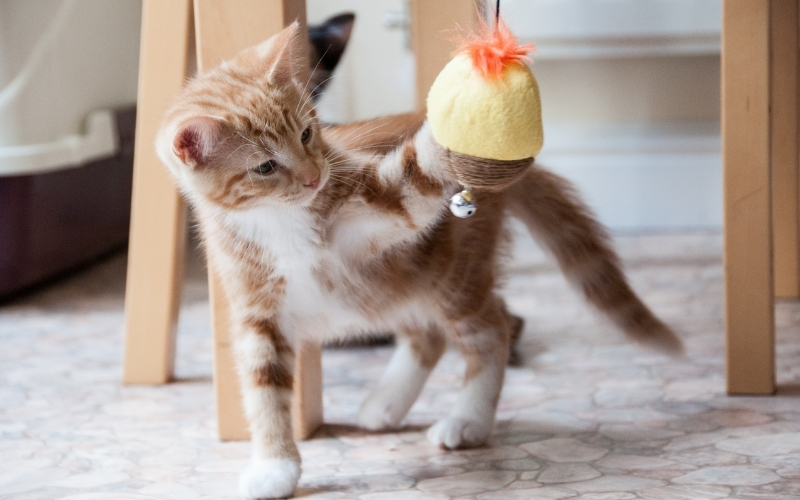
Week seven is the home stretch of weaning. Most kittens are fully or nearly fully transitioned to solid food — a mix of high-quality kitten wet food and kibble. Bottle feeding is winding down or finished entirely.
What’s happening at seven weeks:
- Fully weaned or nearly so
- Confident litter box use
- Active, energetic play sessions
- Bonding with humans intensifies
- Personality is well-established
The socialization window is at its peak right now. Gentle, positive exposure to a variety of experiences — household sounds, different surfaces, calm interactions with people of varied ages — pays huge dividends in adulthood.
How to Care for an 8 Week Old Kitten
Eight weeks is the magic age. By this point, most kittens are:
- Fully weaned onto solid food
- Reliably using the litter box
- Walking, running, climbing, and playing energetically
- Socializing with littermates and humans
- Ready for their first veterinary checkup
Eight weeks is the earliest most reputable shelters and breeders adopt kittens out, and even then, many veterinarians recommend waiting until 12 weeks for ideal social and behavioral development. The extra time with littermates teaches important skills like bite inhibition and play boundaries.
If your kitten is coming home at 8 weeks, expect an adjustment period. Some kittens settle in within hours. Others hide for days. Both are completely normal. Patience wins.
For a detailed guide to the first week with your new kitten, head over to our [Kitten Feeding & Care] section.
The Growth and Training Stage (Months 2–6)
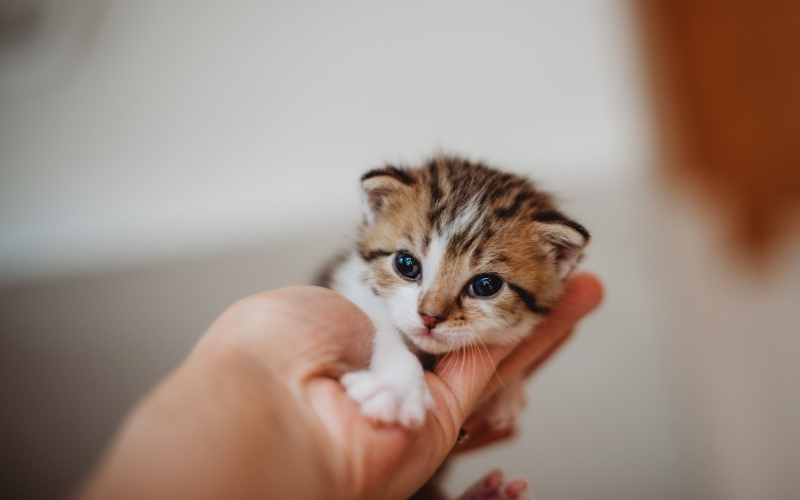
This is the stage most new kitten owners actually experience day-to-day, since kittens are typically adopted between 8 and 12 weeks. Months 2 through 6 are when kittens transition from tiny chaos creatures into something resembling small cats — though “small” is generous, given how fast they grow.
How to Care for a 2 Month Old Kitten (Weeks 9–12)
The first few weeks in their new home are foundational. Your kitten is learning what’s normal, what’s safe, what’s allowed, and what’s not. The patterns you establish now stick.
Veterinary care during this stage typically includes initial vaccinations, deworming, fecal testing, and a general health assessment. Specific vaccine schedules vary based on your kitten’s history, environment, and your vet’s protocols — there’s no one-size-fits-all schedule, and this is exactly the kind of conversation to have with your veterinarian. They’ll customize a plan for your kitten.
Behavioral foundations to establish at 2 months:
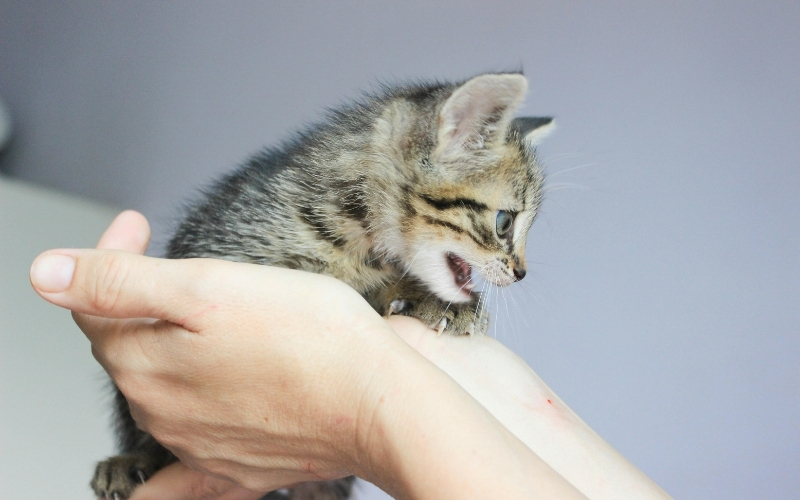
- Redirect biting onto toys. Kittens bite during play because that’s how they learned with littermates. When teeth meet skin, calmly remove your hand and redirect to a wand toy. Don’t yell, don’t punish — just consistent redirection.
- Provide acceptable scratching surfaces near where your kitten naturally hangs out, before bad habits form.
- Build a feeding routine. Most kittens this age eat 3–4 times a day. Consistent feeding times anchor their whole day.
- Establish handling tolerance. Gentle daily touching of paws, ears, mouth, and belly makes future grooming and vet visits dramatically easier.
For a full breakdown of training fundamentals, visit our [Kitten Training] section.
How to Care for a 3 Month Old Kitten (10–12 Weeks)
By three months, your kitten has settled into your home and is showing their true colors. Personality is clear. Energy is enormous. Coordination is improving but still wonderfully ridiculous.
What’s typical at 3 months:
- 3–4 meals per day of kitten-formula food
- Strong play instincts — they need outlets, daily
- Continuing vaccination series with your vet
- Increasingly confident exploration
- Bonding deepens significantly
- Real ability to learn cues and routines
This is when training pays off most. Cats are far more trainable than people give them credit for, and this age is ideal for laying down good habits.
How to Care for a 4 Month Old Kitten
At four months, your kitten is well into a phase of rapid growth and intense play. They’re more coordinated, more confident, and developing real preferences for everything from food to favorite napping spots.
Common developments at 4 months:
- Baby teeth begin falling out as adult teeth come in (you may find tiny teeth around the house — completely normal)
- Coordination improves dramatically
- Play becomes more sophisticated
- First conversations with your vet about spay/neuter timing
- Energy levels peak — schedule serious daily play
How to Care for a 5 Month Old Kitten
Five-month-old kittens are nearly fully coordinated and rapidly approaching adolescence. Many are also nearing spay/neuter age, though exact timing should be a conversation with your vet — there’s no universal “right” age, and the decision depends on your kitten’s individual development, breed, and lifestyle.
What to focus on at 5 months:
- Continued play and enrichment (energy is still very high)
- Routine vet care and conversations about spay/neuter
- Reinforcing good behavior patterns
- Continued positive socialization
How to Care for a 6 Month Old Kitten
By six months, smaller breeds are approaching their adult size. Larger breeds — Maine Coons especially — still have a lot of growing to do.
At 6 months:
- Most kittens are typically eating 2–3 meals per day of kitten food
- Adult teeth are fully in
- Adolescent behaviors may emerge (testing limits, brief mood shifts)
- Continued vet care for boosters and check-ins
- Spay/neuter often happens around this stage, per your vet’s recommendation
A six-month-old kitten is still a kitten — they’ll continue maturing physically and emotionally until around 12 months (longer for large breeds). Don’t switch to adult food yet. Most vets recommend staying on kitten-formula food until about a year old.

The Master Kitten Feeding Timetable and Nutrition Guide
Feeding a kitten the right way changes as they grow. Here’s a general reference table — always pair it with guidance from your vet, who can adjust based on your specific kitten’s weight, breed, and health.
Kitten Age | Feeding Frequency | Food Type | Key Care Focus |
0–2 weeks | Every 2 hours (24/7) | Kitten Milk Replacer (KMR) only | Warmth, bottle feeding, stimulated elimination |
3–4 weeks | Every 3–4 hours | KMR via bottle or shallow saucer | Eyes open, lap-feeding begins, teeth emerging |
5–6 weeks | 5–6 times daily | KMR mixed with wet kitten food (gruel) | Weaning begins, litter training starts |
7–8 weeks | 4 times daily | High-protein kitten wet and dry food | Fully weaned, first vet visit, socialization |
2–3 months | 3–4 times daily | Kitten-formulated wet and dry food | Rapid growth, vaccinations, training, play |
4–6 months | 3 times daily | Kitten food | Continued growth, spay/neuter conversation |
6–12 months | 2–3 times daily | Kitten food (transition to adult around 12 months) | Maturation, behavior development |
A few non-negotiables when it comes to kitten nutrition:
- Always feed kitten-specific food until around 12 months. Adult cat food doesn’t have the calorie density, protein, or nutrient profile growing kittens need.
- Never give cow’s milk. Kittens are lactose intolerant — cow’s milk causes digestive distress.
- Fresh water always available, even for nursing kittens once they’re old enough to lap.
- Look for the AAFCO statement on any kitten food: “formulated for growth” or “all life stages.”
- Talk to your vet about portion sizes for your kitten’s specific weight and growth rate.
For deeper dives, check our detailed guides on [Wet vs. Dry Kitten Food], [How Much to Feed a Kitten by Age], and [When to Transition from Kitten Food to Adult Food] over in [Kitten Feeding & Care].
Kitten Tips and Tricks for New Owners
A few things experienced kitten parents wish they’d known sooner:
The first 2 weeks are about safety, not socializing. Let your kitten settle in slowly. Hide spots, quiet, low expectations.
Two kittens often do better than one. Especially if you’re gone during the day. They keep each other company, burn off energy, and tend to be less destructive than a single bored kitten.
Schedule play sessions twice a day, even just 10–15 minutes each. It changes everything.
Use two litter boxes if you can. Kittens like options.
Skip the punishment. Kittens don’t understand it. Redirect, don’t scold.
Find a vet you trust before you need one urgently.
Take photos. Lots of them. Kitten phase goes fast, and you’ll miss it.
Buy fewer toys, rotate more often. Novelty matters more than quantity.
Treats are training tools. Save them for moments you actually want to reinforce.
Watch for sudden behavior changes. A normally playful kitten who suddenly hides, refuses food, or stops using the litter box should see a vet promptly. Kittens can decline very quickly.
For more detailed practical guidance, visit our [Kitten Feeding & Care], [Kitten Training], and [Kitten Sleep & Play] sections.
Kitten FAQs: Quick Answers for New Kitten Owners
How do I raise a kitten if I work all day?
A few things help enormously. First, kitten-proof a designated safe room with food, water, a litter box, toys, scratching posts, and a comfortable resting spot. Second, provide interactive puzzle feeders and rotating toys to keep their brain engaged. Third, schedule vigorous play sessions before you leave and right when you get home. If your schedule allows, adopting a bonded pair often works beautifully — they entertain each other while you’re away.
What should I do if I find an abandoned or feral kitten?
First, observe from a distance for several hours. Mother cats sometimes leave kittens briefly while hunting, and removing kittens unnecessarily separates them from the best possible care. If the mother doesn’t return within several hours, or the kitten is in immediate danger, keep them warm (this is the #1 priority — cold kittens decline fast), and contact a local rescue, shelter, or veterinarian as soon as possible. Don’t try to feed them until they’re warm and you’ve gotten guidance.
When can kittens start eating solid food?
The weaning process typically begins around 4–5 weeks of age, starting with a soupy gruel mixture of KMR and wet kitten food. By 7–8 weeks, most kittens are fully weaned onto solid kitten food.
How long do kittens sleep?
A lot. Newborns sleep up to 22 hours a day. Even active 8-week-old kittens sleep 16–18 hours daily. Kittens grow during sleep, so all that napping is doing important work. The trade-off is intense, often inconvenient bursts of energy when they’re awake.
When can I bathe my kitten?
Most kittens never need baths — they’re naturally great groomers. If your kitten gets into something they can’t clean off, a gentle bath using kitten-safe shampoo is fine, but wait until they’re at least 8 weeks old and their immune system has matured a bit. Always keep baths brief, warm, and stress-free.
How do I know if my kitten is healthy?
Healthy kittens are active when awake, eat enthusiastically, have soft (not runny) stools, use the litter box reliably, gain weight steadily, and have clear eyes and a clean coat. Any significant deviation — lethargy, loss of appetite, diarrhea, vomiting, breathing changes — should prompt a call to your vet. Kittens can decline very quickly, so it’s better to call early.
When should my kitten see the vet for the first time?
Most kittens should have their first veterinary appointment within the first week of coming home. This first visit establishes a relationship with the vet, allows for a general health check, and starts the conversation about vaccinations, parasite prevention, and any specific care your kitten needs.
How do I raise a kitten without its mother?
Hand-raising a motherless kitten is one of the most demanding things you can take on. It requires KMR feedings around the clock, stimulated elimination, warmth regulation, and constant attention. If you find yourself in this situation, contact a local cat rescue or veterinarian immediately. Many rescues have experienced foster volunteers who can either guide you or take over. Asking for help isn’t giving up — it’s smart, compassionate kitten care.
How can I raise a happy, loving kitten?
Three things matter most: consistent positive interaction, generous play and enrichment, and gentle handling from the earliest age possible. Avoid punishment-based discipline (it doesn’t work and damages trust). Reward good behavior. Respect their boundaries. The kitten you bond with patiently becomes the cat who sleeps on your chest for the next fifteen years.
When should I switch my kitten to adult cat food?
Most kittens stay on kitten-formula food until around 12 months of age. Larger breeds like Maine Coons may benefit from kitten food longer — sometimes until 18 months or even 2 years, since they grow slower. Your vet can give you a personalized recommendation based on your kitten’s growth.
The Secret to Raising a Healthy Kitten
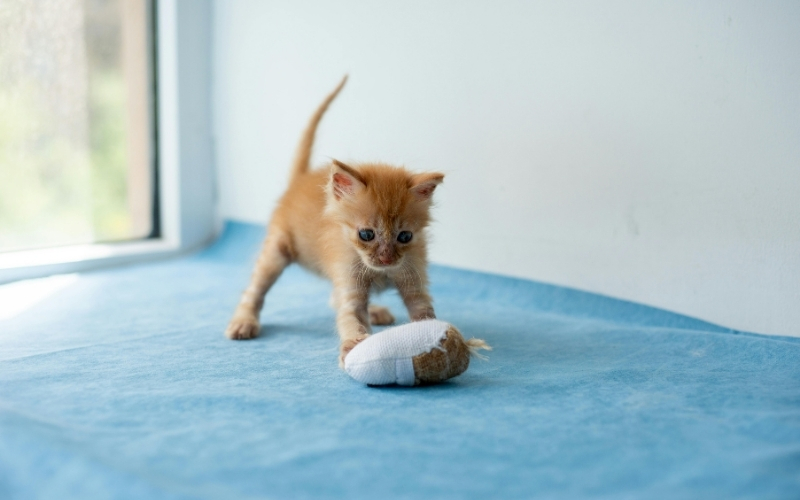
If I had to compress everything in this guide into one piece of advice, it would be this: kittens become the cats we raise them to be.
The consistent feeding routines, the daily play sessions, the gentle handling, the patience with biting and zoomies, the steady redirection rather than punishment, the strong vet relationship — these aren’t small things. They’re the things that shape who your kitten becomes as a one-year-old, a five-year-old, a fifteen-year-old.
You’re going to make mistakes. Every kitten parent does. I’ve forgotten to refill the water bowl, slept through a 3 a.m. zoomie session, and once tried to teach a Bengal kitten to “stay” with the same enthusiasm I’d use for a Labrador. These moments are part of the journey.
What matters is showing up consistently. Loving them well. Calling the vet when something feels off. Asking for help when you need it. Letting them be cats, in all their weird, wonderful glory.
You’ve got this. Welcome to the best, weirdest, most rewarding stretch of pet parenting there is.