Daily Cat Care: The Real-Life Routine That Keeps Cats Happy
Here’s a fun secret most cat owners learn the hard way: cats are not actually low-maintenance.
They’re lower-maintenance than dogs, sure. They don’t need three walks a day or formal obedience training. But cats absolutely thrive on routine, cleanliness, mental engagement, and the small daily rituals that make their world feel safe. The myth that you can fill a bowl, change the litter once a week, and call it a day is exactly that — a myth. And it’s often where new cat owners run into preventable behavior issues, hygiene problems, and that vague sense that something’s off without knowing what.
Daily cat care isn’t complicated, though. Once you build the rhythm, it becomes second nature. Brush them a few times a week. Scoop the litter box every day. Refresh their water. Play with them. Pay attention to small changes. That’s most of it.
This guide covers the everyday side of cat ownership — the practical, hands-on stuff that makes life with cats smoother for both of you. Grooming basics, litter box mastery, home setup that actually works for cats, daily routines that prevent problems before they start, and how to travel with (or without) your cat without losing your mind.
Most of what’s in here comes from years of living with cats, testing what works, and learning from the mistakes I’ve made along the way. None of it is meant as medical advice — for anything health-related, your vet is the right person to ask. What this guide can do is help you build a daily care routine that genuinely supports a happy, healthy cat.
Let’s get into it.

Why Daily Cat Care Matters More Than People Think
Cats are creatures of routine. Their internal clocks are remarkably precise — most cat parents have experienced the cat who knows exactly when dinner is supposed to happen, even on weekends. That love of routine isn’t a quirk. It’s how cats feel safe.
A consistent daily care routine accomplishes a few important things at once. It keeps your cat physically clean and comfortable. It catches small changes early — a missed meal, a different litter box pattern, a coat that’s looking rougher than usual. It builds trust through predictability. And it prevents most of the behavior problems that drive cat owners to the internet at 11 p.m. wondering what went wrong.
When you skip the daily basics — letting the litter box get gross, forgetting to brush a long-haired cat, leaving the water bowl half-empty — small problems compound. A cat who finds the litter box unpleasant may start eliminating elsewhere. A cat who never gets brushed develops mats and hairballs. A cat whose enrichment is inconsistent gets bored, and bored cats find their own entertainment, usually involving your furniture.
The good news is that daily cat care doesn’t take much time. Ten to fifteen minutes a day, done consistently, covers the basics for most cats. The hard part isn’t the work — it’s the consistency.
Cat Grooming Basics
Cats are extraordinary self-groomers. That’s not a myth. They genuinely spend up to half their waking hours grooming themselves, and they do an impressive job. But even the most fastidious cat benefits from a little human help, especially when it comes to brushing.
Regular grooming does more than keep your cat’s coat looking good. It cuts down on hairballs by removing loose fur before your cat swallows it. It reduces shedding around the house. It gives you a chance to spot skin issues, lumps, fleas, or wounds early. And it strengthens your bond — many cats genuinely come to love being brushed once they get used to the experience.
Brushing Your Cat
How often you should brush your cat depends largely on coat type.
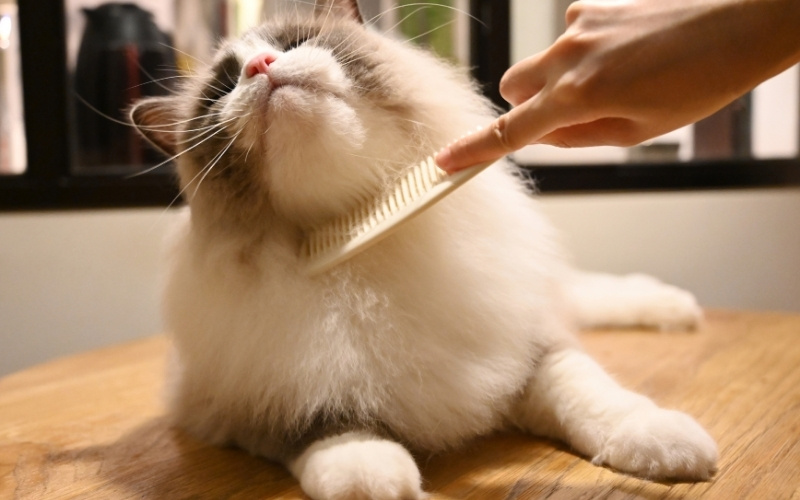
Short-haired cats typically do well with brushing once or twice a week. A simple slicker brush, rubber grooming mitt, or a tool like the FURminator handles most short-haired coats easily.
Medium and long-haired cats — Maine Coons, Ragdolls, Persians, Norwegian Forest Cats — need brushing two to three times a week minimum, sometimes daily during shedding seasons. Mats develop fast in longer coats, and once they’re established, they’re painful and difficult to remove.
The key is making brushing positive from the start. Short sessions, gentle pressure, treats afterward, and always ending before the cat gets annoyed. A cat who associates the brush with stress will never sit still for grooming. A cat who associates it with attention and reward will jump up for it.
If you’re starting brushing with an adult cat who’s never tolerated it, go slowly. A single stroke today. Two strokes tomorrow. Build tolerance over weeks, not days. Force never works with cats.
Bathing Cats
Most cats never need a bath. They handle their own cleaning better than we do, and the act of bathing is stressful for many cats — sometimes deeply so. Exceptions exist, though.
You might need to bathe a cat who:
- Got into something genuinely sticky or toxic
- Has a skin condition requiring medicated shampoo (per your vet)
- Belongs to a hairless breed like the Sphynx, which actually does require regular bathing
- Is too old, sick, or overweight to groom themselves properly
When a bath is necessary, use lukewarm water, a cat-safe shampoo (never human or dog shampoo — pH is different), keep the water level shallow, support your cat with one hand, and work quickly. A sprayer attachment helps. So does having a second pair of hands.
The trick to a manageable bath is preparation. Have everything within reach before you start. Towels, shampoo, treats, and a calm voice. The faster the experience is over, the better for both of you.

Nail Trimming
This is the grooming task most cat owners avoid, and I get it. Cat nails are tiny, cats often hate being held still, and the fear of cutting the quick is real. But regular nail trims — every 2 to 3 weeks for most indoor cats — prevent overgrown nails, reduce scratching damage, and protect your cat from snagging on furniture or carpet.
A few tips that make nail trims easier:
- Use clippers designed specifically for cats. Scissor-style or guillotine-style both work; choose what feels comfortable.
- Hold the paw gently and press the pad to extend the claw.
- Clip only the clear, curved tip. The pink area inside is the quick — it has nerves and blood vessels. Avoid it.
- Start with one or two nails per session if your cat resists. Build up over time.
- Treat afterward. Always.
If your cat truly won’t tolerate nail trims, ask your vet or a professional groomer to help. Some cats simply do better with a stranger handling them briefly than with their primary human pinning them down at home.
Ear Cleaning
Most cats don’t need ear cleaning at all. Their ears are self-cleaning, and over-cleaning can actually cause problems. But occasional checks — every few weeks — help you spot issues early.
A healthy cat ear is pale pink inside, mostly clean, and odorless. If you notice dark debris, redness, swelling, an unusual smell, or your cat scratching at their ears repeatedly, that’s worth a vet visit. Ear mites, infections, and other issues all require professional treatment.
For routine maintenance only, a soft cotton pad with a vet-approved ear cleaner can be used to gently wipe the visible part of the ear — never down into the ear canal. When in doubt, don’t.
Managing Shedding and Hairballs
Cats shed. All of them, to varying degrees. Some shed seasonally; some shed constantly; some short-haired cats actually shed more than some long-haired cats. It’s part of the deal.
Consistent brushing is the single most effective shedding management strategy. The fur you remove with a brush is fur that’s not landing on your couch, your clothes, or being swallowed during self-grooming.
Hairballs are the side effect of swallowed fur. They’re common, but they shouldn’t be frequent. A cat producing more than one or two hairballs a month is worth mentioning to your vet — sometimes excessive hairballs signal other issues. For most cats, regular brushing and good hydration handle the problem fine.
Litter Box Mastery
If I had to name the single most important area of daily cat care, it would be the litter box. A clean, well-placed, comfortable litter box prevents the majority of behavior issues that send cat parents into a panic spiral. A bad litter box setup causes more problems than any other single factor in cat ownership.
Cats are deeply particular about their bathroom. They notice things humans don’t — subtle smells, slight texture changes, location annoyances. When something feels wrong, they vote with their behavior, often by going somewhere else entirely.
The Litter Box Rule
The standard rule is one litter box per cat, plus one extra. So one cat means two boxes. Two cats means three boxes. This rule isn’t pedantic. It genuinely matters, especially in multi-cat households where one cat may guard or block another cat’s access without you realizing it.
Even single-cat homes benefit from having two litter boxes, ideally in two different locations. Cats appreciate options. And a cat who develops a temporary aversion to one box still has somewhere clean to go.
Where to Put a Litter Box
Location matters more than most people realize. The ideal spot is:
- Quiet and low-traffic
- Easily accessible at all times
- Not near food and water bowls (cats don’t like to eat where they eliminate)
- Not in a closet that can accidentally close
- Not next to loud appliances like washing machines or furnaces (sudden noise spooks cats out of using the box)
Avoid placing litter boxes in remote basement corners or upstairs spare rooms that nobody visits. Cats may use them, but they may also decide it’s too far and find a more convenient spot. Convenience matters for cats too.
If you have multiple floors in your home, place at least one box on each floor.
Choosing the Right Litter
There’s an entire world of cat litter, and the options can feel overwhelming. The main categories:
Clumping clay is the most popular type for adult cats. It clumps tightly when wet, making scooping easy, and most cats accept it without complaint. Avoid scented varieties — what smells fresh to us often smells overwhelming to cats.
Non-clumping clay is cheaper but requires more frequent full changes. Best reserved for kittens under 8 weeks, who shouldn’t be exposed to clumping litter due to ingestion risk.
Crystal/silica gel litter absorbs odors well and lasts longer, but the texture isn’t loved by all cats.
Natural litters — pine, corn, wheat, paper, walnut — vary widely in performance. Some cats love them, some refuse to use them. Worth experimenting if you have environmental preferences.
Whatever you choose, stick with it once your cat approves. Sudden litter changes are one of the most common reasons cats start eliminating outside the box.
Cleaning Frequency
Scoop daily. Non-negotiable. A litter box that’s scooped daily and stays smelling fresh is one your cat will use happily. A box that’s been ignored for three days is one your cat may abandon entirely.
Full litter changes — dumping all the litter, washing the box, refilling with fresh — should happen every 2 to 4 weeks for most cats, more often in multi-cat homes. Use plain soap and water; avoid bleach or strong chemicals that leave residual smells.
Replace the actual litter box itself every 1 to 2 years. Plastic absorbs odors over time, and even with thorough cleaning, an old box can start triggering avoidance behaviors.
When Cats Stop Using the Litter Box
Sudden litter box avoidance is one of the clearest signs that something is wrong. It’s almost never about being “naughty.” Cats don’t pee on the bed out of spite. There’s always a reason.
Common causes include:
- The box isn’t clean enough
- The litter type or brand changed
- The box’s location changed
- Another cat is blocking access
- The box is uncomfortable (too small, too high-sided, hooded when they prefer open)
- Stress in the environment (new pets, new people, moving, construction)
- An underlying medical issue
That last one matters most. A cat who suddenly stops using the litter box should see the vet promptly. Urinary tract issues, kidney problems, and other medical conditions sometimes show up first as litter box changes. Behavioral troubleshooting only works after medical causes have been ruled out.
Setting Up a Cat-Friendly Home
You don’t need to redesign your entire house for your cat. But a few intentional changes make a huge difference in how comfortable, confident, and entertained your cat feels in their environment.
The biggest concept to understand is that cats experience space in three dimensions. They want to climb, perch, observe, and have territories at different heights. A home that only uses floor-level space feels smaller and less interesting to a cat than the same home with vertical options.
Vertical Space and Climbing
Cat trees aren’t decorative. They’re functional environmental enrichment that genuinely improves quality of life for indoor cats. A good cat tree gives your cat:
- Elevated perches for observing the world
- Scratching surfaces to maintain claws
- Hiding spots within enclosed spaces
- Vertical territory in multi-cat households (reduces conflict)
Place cat trees near windows when possible. A cat tree with a window view is exponentially more valuable than one facing a wall. The outdoor traffic — birds, squirrels, weather — provides constant mental stimulation.
Beyond cat trees, vertical space can come from window perches, wall-mounted shelves, cleared-off shelf tops, or even the top of a bookcase. The more your cat can climb and observe, the richer their environment becomes.
Scratching Surfaces
Every cat needs at least one (ideally several) appropriate scratching surface. Without it, they’ll find one — and you probably won’t like their choice.
Different cats prefer different scratching types:
- Vertical posts for full-body stretches (most popular)
- Horizontal scratchers (cardboard or sisal) for cats who like to scratch lying down
- Angled scratchers that some cats prefer
Place scratchers in areas your cat frequents. A scratcher hidden in a back room won’t get used. One next to their favorite napping spot, near the door they greet you at, or by their cat tree gets daily use.
Sturdy matters. A scratching post that wobbles when the cat uses it gets abandoned quickly. Tall enough for a full stretch, heavy enough to stay still — those two qualities matter most.
Safe Spaces and Hiding Spots
Every cat needs at least one place where they can decompress completely. This is especially important in homes with kids, other pets, or visitors.
A safe space can be as simple as:
- A covered cat bed in a quiet corner
- The interior of a cat tree
- A sturdy cardboard box (cats genuinely love these)
- An open closet shelf with bedding
The point is that your cat has the option to retreat when they feel overwhelmed. Cats who can self-soothe tend to be happier, less anxious, and less prone to behavior issues.
Feeding Station Setup
Where and how you feed your cat shapes their daily experience more than most people consider. A good feeding station has:
- Bowls placed away from the litter box (cats won’t eat near where they eliminate)
- Food and water bowls slightly separated (cats often prefer water sources distinct from food)
- A quiet location without high traffic
- Easy-to-clean surfaces underneath
In multi-cat households, separate feeding stations for each cat reduce competition and stress. Cats are not herd animals — they don’t naturally eat in groups. Some cats become anxious eaters when crowded.
Houseplants and Cat Safety
Many common houseplants are toxic to cats. Some are deadly. Lilies of any variety are particularly dangerous — even pollen from a lily can cause severe kidney damage in cats.
The ASPCA maintains a complete database of toxic and non-toxic plants at aspca.org, and it’s worth checking every plant in your home against it. Common problem plants include:
- Lilies (all varieties)
- Sago palm
- Tulips
- Azaleas and rhododendrons
- Pothos
- Philodendron
- Aloe vera
- Many succulents
Cat-safe alternatives include cat grass, spider plants, Boston ferns, African violets, and air plants. If your cat tends to chew on greenery, cat grass and catnip are great safe outlets.

Building a Daily Cat Care Routine
Routine isn’t just nice for cats — it’s essential. Cats feel safest when they know what to expect. The same feeding times, the same play sessions, the same little daily rhythms.
A daily cat care routine doesn’t take long once you build it. Most of what’s needed can fit into 15 to 30 minutes spread throughout the day. The point isn’t quantity. It’s consistency.
A Practical Daily Routine
A well-rounded daily care routine includes:
Morning:
- Fresh water (rinse bowl, refill)
- Breakfast at a consistent time
- Quick visual check — eyes, coat, general energy
- Litter box scoop
Afternoon or evening (when you’re home):
- 10 to 15 minutes of interactive play with a wand toy
- Brushing session if appropriate for coat type
- Cuddle or quiet bonding time
Evening:
- Dinner at a consistent time
- Final litter box scoop
- Quiet wind-down (cats settle into nighttime rhythm with calmer human energy)
Weekly tasks layer onto this:
- Wash food and water bowls thoroughly
- Full or partial litter change
- Wash bedding
- Trim nails if needed (every 2–3 weeks)
The structure matters more than the exact times. Cats adapt to your schedule — what they need is the schedule itself.

How Long Can a Cat Be Left Alone
Most healthy adult cats can be safely left alone for up to 24 hours with sufficient food, water, and a clean litter box. Beyond that, problems start emerging — water gets dirty, litter boxes fill up, food bowls get cleaned out, loneliness sets in.
For absences longer than a day, you have a few options. A trusted friend, neighbor, or cat sitter who can check in daily handles most situations. Automatic feeders and water fountains help, but they’re supplements, not replacements for human contact.
Kittens, senior cats, and cats with medical needs require more frequent attention. A kitten shouldn’t be left alone more than 4 to 6 hours in their early months. A senior cat may need medication or monitoring that can’t wait.
Watching for Changes
This is the silent superpower of a good daily routine — you start noticing changes early because you have a baseline. A cat who normally eats enthusiastically suddenly nibbles. A cat who normally sleeps on the couch suddenly hides under the bed. A cat whose litter box habits shift overnight.
Cats are masters at hiding when something’s wrong. That’s a survival instinct. The cat parents who catch issues early are the ones paying daily attention to their cat’s baseline behavior. When something shifts noticeably, that’s your signal to keep watching. When something shifts and stays shifted, that’s your signal to call the vet.
You don’t need to be paranoid. You just need to be observant. The routine itself builds the observation in naturally.
Traveling with Cats (and Leaving Them Behind)
Most cats are not fans of travel. They love their territory, their smells, their rhythm. Take all that away and you’ve got a stressed-out cat in a carrier giving you the saddest meow you’ve ever heard. But sometimes travel is unavoidable — vet visits, moves, holidays, family situations. And sometimes the kindest option is leaving your cat home with the right care while you go.
The Carrier: Your Most Important Travel Tool
A good carrier makes everything else easier. Look for:
- Hard-sided design for safety in cars
- Top-loading or split-opening for easier in/out
- Enough room for the cat to stand and turn around
- Secure latches that won’t pop open
- A removable, washable bottom liner
Most cats hate carriers because they only ever associate them with vet visits. The fix is leaving the carrier out in your home with a soft blanket inside, treats nearby, and the door open. Over weeks, many cats stop fearing the carrier and may even nap inside it. That single change makes vet trips infinitely easier.
Car Travel with Cats
For short trips (vet visits, local moves):
- Secure the carrier with a seatbelt
- Cover the carrier with a light cloth — many cats prefer the visual quiet
- Keep the car cool and well-ventilated
- Don’t open the carrier mid-trip, even if the meowing breaks your heart
For longer trips, plan more carefully:
- Take breaks every few hours to offer water (offer in the carrier, don’t open in unfamiliar places)
- Never leave a cat in a hot car — heat kills cats fast
- Bring familiar items: a blanket from home, a favorite toy
- Consider talking to your vet about anxiety options for severely stressed cats
Flying with Cats
Air travel with cats is its own ordeal. Each airline has different policies, and many limit pet cabin space significantly. If you’re flying with a cat:
- Book directly with the airline as soon as you book your ticket
- Use an airline-approved carrier that fits under the seat
- Don’t sedate without specific veterinary guidance — sedation at altitude can cause complications
- Get a vet health certificate dated within the airline’s required window
- Arrive at the airport earlier than usual
For international travel, the paperwork and quarantine requirements get serious. Start planning months in advance.
Leaving Your Cat at Home
For most trips, leaving your cat at home is significantly less stressful than bringing them along. Cats are territorial — their territory is what comforts them. Removing them from it for a vacation usually creates more stress than staying.
You have three main options:
Cat sitter visits. A professional pet sitter or trusted friend comes to your home one or more times a day to feed, scoop, and spend a little time with your cat. This is the gold standard for most cats. They stay in their home environment, keep their routine, and get human contact regularly.
Live-in cat sitter. A friend or pet sitter stays at your home for the duration. Even better for cats who need more company, but harder to arrange.
Boarding facility. A boarding kennel or cat-only boarding facility. Better for some situations, but most cats find boarding stressful. If you go this route, look for a cat-only facility (no barking dogs nearby) and visit beforehand to assess conditions.

Cat Sitter vs. Boarding
For most cats, in-home sitter care wins. Pros:
- Cat stays in familiar territory
- Routine stays the same
- No transportation stress
- Less exposure to unfamiliar animals or illnesses
- More personalized attention
Boarding makes sense when:
- You don’t have a trustworthy sitter available
- Your cat has special medical needs requiring trained staff
- Your home isn’t safe to leave unoccupied
- You want professional 24/7 oversight
Whichever you choose, prepare detailed care instructions: feeding times, medication schedules, litter preferences, hiding spots, emergency vet contact, and what’s normal behavior versus what warrants concern. The more detail you give, the better care your cat receives.
Moving Houses with Cats
Moving is among the most stressful experiences for cats. Their entire territory disappears overnight. A few practices that minimize the trauma:
Before the move:
- Get them comfortable with the carrier weeks in advance
- Keep their routine as normal as possible
- Update microchip information with the new address
Moving day:
- Set up a “safe room” at the new house with their food, water, litter box, bed, and toys before bringing them in
- Keep your cat in a closed bedroom at the old house during the chaos of moving day, then transport them last
- Don’t let them roam the new house immediately
After the move:
- Let them stay in the safe room for several days
- Gradually expand their access as they grow confident
- Maintain feeding times and routines as much as possible
- Expect some hiding, reduced appetite, and weirdness for a week or two
Most cats adjust within a few weeks. Patience helps more than anything else.

The Daily Cat Care Mindset
If everything in this guide had to compress into a few principles, it would be these:
Consistency matters more than perfection. A daily routine done imperfectly beats a perfect routine done occasionally.
Cats are not low-maintenance — they’re low-drama. Big difference. They need your attention; they just don’t demand it the way dogs do. Which is exactly why daily care matters.
Most behavior problems trace back to environment problems. Litter box issues, scratching damage, midnight zoomies — almost all of it improves dramatically with the right daily setup.
Notice the small things. The water bowl level. The coat texture. The litter box pattern. The energy when they greet you. Your cat is constantly telling you how they’re doing. Daily attention is what catches the signals.
When something feels off, trust your gut. Cats hide their discomfort well. Cat parents who know their cats notice the subtle shifts. That instinct is real, and it’s worth honoring.
And finally — daily cat care isn’t a chore. It’s the ongoing conversation between you and a small wild thing who chose to share your home. The brushing, the play sessions, the litter scooping, the bowl refills — they add up to a life together. That’s the part nobody tells you when you bring a cat home. The daily care isn’t separate from the relationship. It is the relationship.
The cat you live with five years from now is the cat your daily care builds. Show up consistently. Pay attention. Stay curious. The rest tends to work itself out.