Cats have a reputation for being mysterious. Aloof. Hard to read. The internet is full of jokes about how dogs love you and cats are just plotting your downfall.
Here’s the thing though: cats aren’t mysterious at all. They’re constant communicators. Every flick of the tail, twitch of the ear, slow blink, headbutt, and 3 a.m. zoomie session is a sentence in cat-speak. The problem isn’t that cats don’t talk to us — it’s that most of us never learned the language.
That’s what this guide is for.
Once you start reading your cat’s signals, your whole relationship shifts. You stop guessing what they want. You start anticipating it. You catch stress before it becomes a behavior problem. You catch trust the moment it’s offered. And honestly? You start enjoying your cat in a whole new way.
I’ve spent years observing cats — my own, friends’ cats, foster kittens, every cat who let me near them in line at the vet — and reading everything I could find about feline behavior. Most of what cats do has a real, knowable reason behind it. Some of it is instinct. Some of it is communication. A surprising amount of it is just cats being cats, which is its own kind of explanation.
Let’s dig in.
Quick Summary
This complete cat behavior guide walks you through how to read feline body language, decode common cat behaviors (including the famous 3 a.m. zoomies), troubleshoot nighttime issues like door scratching, and use gentle, science-backed approaches to modifying problem behaviors. No jargon, no judgment, just real help for cat parents who want to understand their cats better.
Decoding Feline Communication: How to Understand Cat Body Language and Mood
Cats talk with their bodies more than anything else. Their tails, ears, eyes, whiskers, posture — all of it is part of a constant stream of communication. The good news is that once you learn the basics, you’ll start catching messages you’ve been missing for years.
Body language is also how cats avoid conflict. A confident cat doesn’t want to fight any more than a scared one does. They use signals to communicate distance, comfort, curiosity, or “please back off.” When humans miss those signals, that’s often when scratches and bites happen — not because the cat is mean, but because the cat tried to warn us and we didn’t listen.
So let’s learn how to listen.
Reading the Eyes, Ears, and Whiskers
Your cat’s face tells you almost everything you need to know about their mood at any given moment. Three areas to watch: the eyes, the ears, and the whiskers.
Pupils: Dilated vs. Constricted
A cat’s pupils respond to both light and emotion. In bright light, healthy pupils naturally constrict to thin slits. In low light, they expand to nearly fill the eye. That’s normal physiology.
But pupils also dilate in moments of strong emotion — excitement, fear, surprise, or sudden arousal during play. If your cat’s pupils are huge mid-play session, that’s predator mode kicking in. If their pupils are dilated while they’re hiding behind the couch, that’s fear or stress.
Constricted pupils in normal lighting, on the other hand, often mean focus, alertness, or sometimes irritation — especially when paired with a stiff body and a flicking tail.
The trick is reading pupils in context with the rest of the body. A wide-eyed cat zooming through the hallway is having a blast. A wide-eyed cat frozen in a corner is asking for space.
Ear Positions
Cat ears are extraordinarily expressive. They rotate independently like little radar dishes and shift position based on mood and attention.
- Forward, upright ears: Relaxed, curious, or alert. This is your cat’s default “all is well” position.
- Ears swiveled to the sides (“airplane ears”): Mild irritation or uncertainty. Often a precursor to “leave me alone now, please.”
- Flattened ears against the head: Fear, defensiveness, or pre-aggression. This is a stop sign. Back off.
- Twitching ears: Mild irritation, alertness, or sometimes a sign your cat is tracking a sound.
When ears go flat, it doesn’t always mean your cat is about to attack. It usually means they feel cornered or overwhelmed. Give them space and they’ll usually settle down.
Whiskers
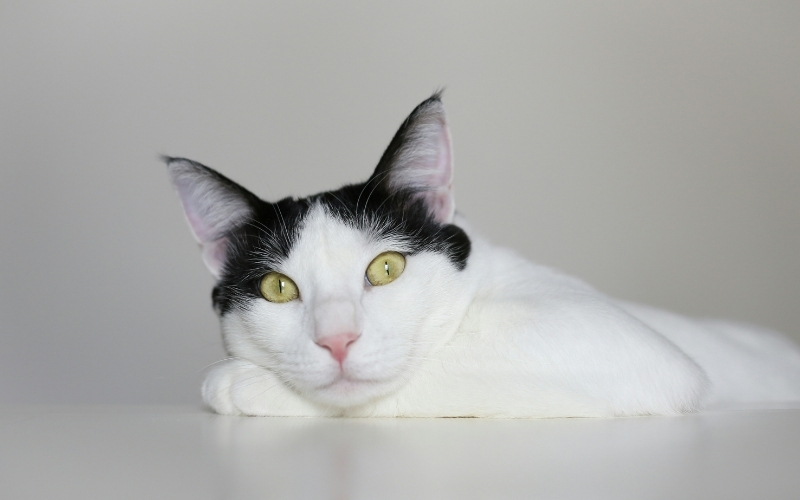
Whiskers are the underrated MVPs of cat body language. They move based on mood, not just sensory input.
- Whiskers relaxed and slightly forward: Calm and content.
- Whiskers pushed dramatically forward: Curious, alert, or hunting.
- Whiskers flattened back against the face: Fear, stress, or anger.
Most people never look at whiskers. Once you start, you’ll be surprised how much they tell you.
The Tail Language Cheat Sheet
If you only learn one thing about cat body language, learn the tail. Cat tails are practically subtitles for everything else going on.
The Question Mark Tail (or “Hello!” Tail)
A tail held high with a little curve at the tip — like a question mark — is the friendliest signal in the cat vocabulary. It means your cat is confident, happy, and approachable. Often it’s a greeting reserved for trusted humans or favorite cat friends.
When your cat trots toward you with that little tail flag in the air? You’re somebody special.
The Puffed-Up Tail (Halloween Cat Tail)
If your cat’s tail suddenly looks three times its normal size, that’s a fear or defensive response. Their fur stands on end (called “piloerection”) to make them look bigger to a perceived threat. You’ll usually see this paired with an arched back and flattened ears.
Common triggers? A surprise vacuum cleaner. Another cat appearing at the window. A particularly suspicious-looking cucumber, apparently. Give them space until they calm down.
The Low Twitch or Thump
A tail held low and twitching at the tip — especially while staring intently at something — is often a sign of focus or mild agitation. It can mean your cat is about to pounce on a toy, or it can mean they’re getting irritated and would like you to stop petting them now, thanks.
The full “thumping” tail (where the entire tail thuds against the floor) is a clearer warning: I am annoyed. Read the room.
Other Tail Cues Worth Knowing
- Tail tucked under the body: Submission, fear, or pain. Worth watching.
- Slow tail swish: Mild focus or thought, often during play observation.
- Tail wrapped around you: Affection. Take it as the compliment it is.
Vocalizations and Subtle Cues
Cats are surprisingly chatty when they want to be. They develop different meows for different situations, and many cat parents learn to distinguish “feed me,” “play with me,” and “let me out” without even trying.
A few vocalizations worth understanding:
Purring isn’t always happiness. Cats purr when they’re content, yes, but they also purr when they’re stressed, injured, or sick. Research suggests purring may serve as a self-soothing mechanism — the vibration frequency has even been linked to potential healing benefits in studies cited by veterinary publications. So a purring cat curled in your lap is probably happy. A purring cat hiding under the bed is probably trying to comfort themselves.
Chirping or chattering is that strange clicking noise cats make when they spot a bird through the window. Most experts think it’s a mix of hunting excitement and frustration at not being able to reach the prey.
Yowling or excessive nighttime vocalization in an older cat can sometimes signal an underlying issue — anything from cognitive changes to discomfort. If a normally quiet senior cat suddenly becomes very vocal, that’s worth mentioning to your vet.
The Slow Blink: The Ultimate Sign of Trust
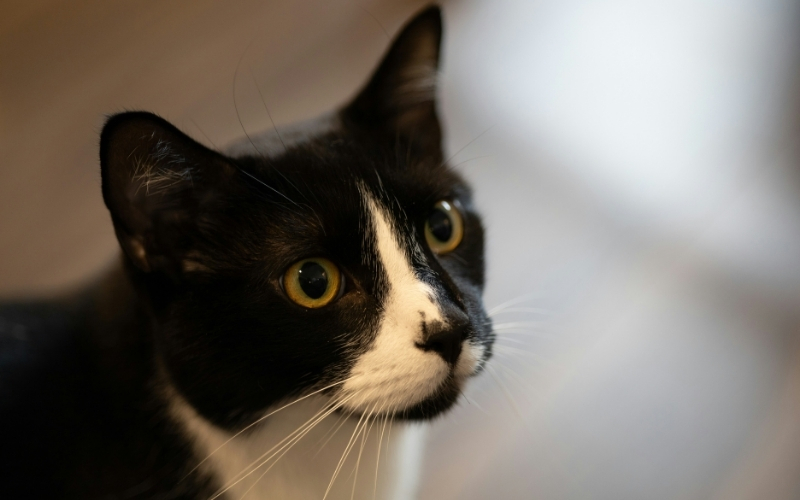
If your cat looks at you, slowly closes their eyes, and opens them again — congratulations. You just got a feline love letter.
The slow blink is one of the clearest signs that your cat feels safe with you. In cat culture, closing your eyes around another being means you don’t see them as a threat. It’s vulnerability. It’s trust.
Try slow-blinking back. Many cats will return the gesture. It’s one of the most peaceful little communication loops you’ll ever experience.
Common Feline Behaviors Explained (And Why They Do It)
Cats do a lot of weird things. Some of those things have obvious explanations once you know them. Others stay charmingly mysterious. But most behaviors that puzzle us as humans make perfect sense from a cat’s point of view.
Here are some of the most common feline behaviors and what’s actually behind them.
Hunting and Play Instincts
Cats are obligate predators. Even the chunkiest, laziest house cat is wired with the same hunting instincts as their wild ancestors. That instinct doesn’t go away just because we feed them on a schedule.
Most “weird” cat behaviors trace back to hunting instinct in some way.
Why Indoor Cats Get the Zoomies at 3 a.m.
Cats are crepuscular — meaning they’re most active at dawn and dusk. That timing isn’t random. It’s when their wild ancestors had the best hunting conditions. So when your indoor cat suddenly sprints through the apartment at 3 a.m., that’s not a glitch. That’s biology.
What triggers the zoomies, specifically?
- Pent-up predatory energy that hasn’t been burned off through play
- A sudden burst of confidence in a young or recently rescued cat (often a great sign of comfort)
- Post-litter-box euphoria (genuinely a thing, look it up)
- Pre-bedtime hunting simulation before settling in for sleep
The fix for unwanted nighttime zoomies isn’t punishment — it’s prevention. A vigorous play session before bed, ideally with a wand toy that lets your cat “hunt” and “kill” something, can drain that energy and lead to deeper sleep for everyone in the house.
Stalking, Pouncing, and “Killing” Toys
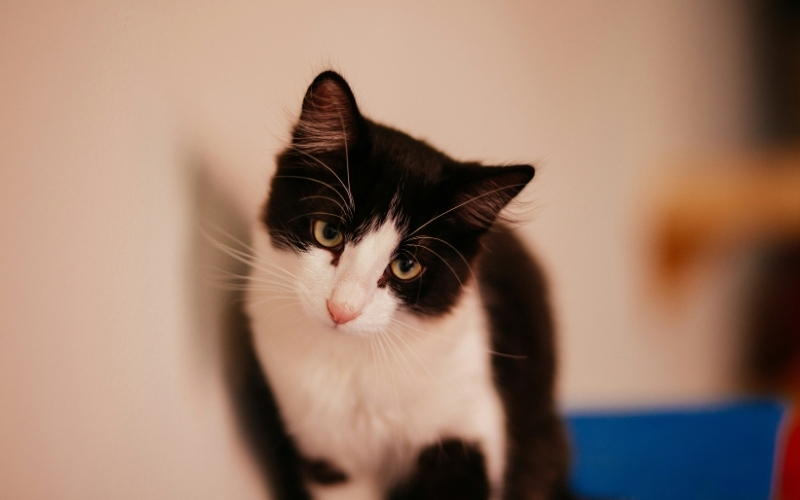
When your cat crouches low, wiggles their butt, and launches themselves at a toy (or your unsuspecting foot), they’re running through the full predatory sequence: stalk, pounce, kill, eat. Indoor cats especially need outlets for this cycle. Toys that move erratically, hide, or trigger that hunting circuit are gold.
Without enough hunting play, cats can get frustrated. Frustrated cats are more likely to redirect that energy in less ideal ways — like ambushing your ankles when you walk through the hallway.
Scent Marking and Territory
Cats live in a world of scent. They have scent glands all over their bodies — on their cheeks, foreheads, paws, flanks, and tails — and they use those glands constantly to mark their territory, their belongings, and the people they love.
This explains some of the most heartwarming and most frustrating cat behaviors.
Head Bunting (The “I Love You” Head Bonk)
When your cat headbutts you, presses their forehead against your hand, or rubs their cheek along your phone, they’re not just being cute. They’re depositing pheromones from facial scent glands onto you. In cat language, that’s claiming you as part of their safe, familiar world.
It’s one of the highest compliments a cat can give. It means you’re family.
Scratching: Not Malice, But Maintenance
Cats scratch for several reasons, and “ruining the furniture” isn’t one of them — at least not from their point of view.
- Claw maintenance. Scratching helps shed the outer sheath of the claw.
- Stretching. Big satisfying full-body stretches feel great.
- Scent marking. Glands in their paws leave their signature behind.
- Visual marking. The scratch marks themselves are a “I was here” signal to other cats.
Trying to eliminate scratching entirely is fighting biology. Redirecting it to acceptable surfaces (scratching posts, cardboard scratchers, sisal pads) is much more effective. Place the new scratcher near the spot they currently scratch, and most cats transition over time.
Spraying vs. Marking vs. Inappropriate Urination
These are three different things and they often get lumped together. Spraying (small amounts of urine, usually on vertical surfaces, often in unneutered cats) is territorial. Inappropriate urination in normal squatting form, in unusual places, often signals stress, litter box dissatisfaction, or sometimes a medical issue. If your cat suddenly stops using the litter box, please loop in your vet — that’s exactly the kind of behavioral shift that can have a medical cause.
Troubleshooting Nighttime Disruptions: Why Your Cat Scratches the Door at Night
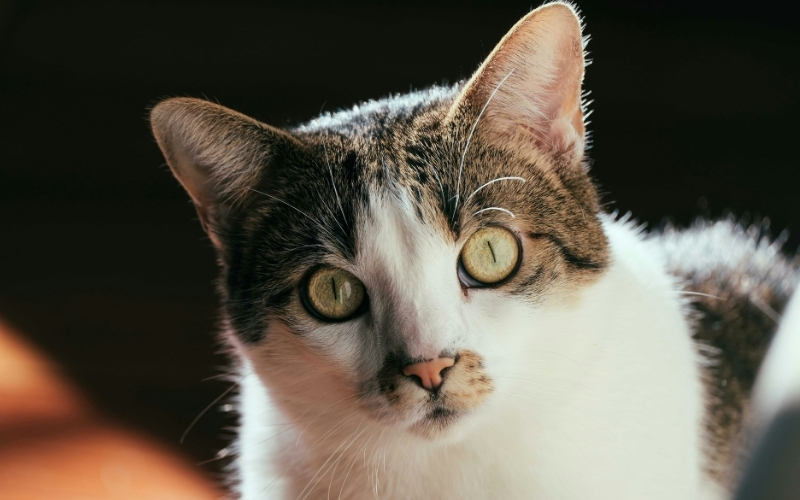
Few things test the human-cat bond like being woken up at 4 a.m. by an enthusiastic clawing-at-the-door symphony. If you’ve Googled “why does my cat scratch the door at night” at some ungodly hour, you’re not alone.
Here’s what’s actually going on — and how to fix it without breaking the relationship.
The Root Causes of Nighttime Attention-Seeking
Nighttime door scratching almost always traces to one of a handful of underlying causes:
Boredom or Lack of Daytime Stimulation
Indoor cats who sleep most of the day often hit nighttime with a full energy tank. If they haven’t had enough mental and physical stimulation while the sun was up, they’ll find a way to express that energy — usually by waking you up.
Separation Anxiety or Loneliness
If you’ve closed your bedroom door and your cat is used to being near you, the closed door itself can trigger anxiety. Cats are more emotionally attached to their people than the “aloof cat” myth suggests, and feeling shut out can be genuinely distressing.
Hunger or Schedule Disruption
If your cat’s last meal was at 6 p.m. and they’re awake at 5 a.m. looking for breakfast, scratching the door is a reasonable strategy from their point of view.
Habit Reinforcement
If you’ve ever gotten out of bed at 3 a.m. to deal with the scratching — even just to yell “stop it!” — congratulations, you’ve taught your cat that door scratching gets attention. Cats are great at learning what works.
Quick Fixes to Stop Nighttime Scratching
The good news? This is one of the most fixable behavior issues in the cat parenting world. It just requires consistency.
Don’t reward the behavior — even with negative attention.
This is the hardest part. Yelling, getting up, opening the door, or engaging in any way teaches your cat that scratching works. The behavior often gets worse before it gets better, but stay strong. Ignoring it (when possible) is one of the fastest paths to stopping it.
Use physical deterrents at the door.
Things that work for many cats:
- Double-sided tape on the door bottom (cats hate the texture on their paws)
- A motion-activated air sprayer set near the door
- A heavy mat or runner placed where they’d scratch
- A scratching post placed near the door — sometimes redirecting the behavior solves it entirely
Establish a “Play, Feed, Sleep” evening routine.
This is the gold standard for fixing nighttime issues. About an hour before bedtime:
- Vigorous play session with a wand toy — 10 to 15 minutes of real hunting energy
- A small meal or snack immediately after — this mimics the natural “hunt, kill, eat” sequence and triggers a sleepy state
- Quiet time to settle in for the night
Most cats fall into deeper sleep after this routine, and the nighttime scratching often fades within a couple of weeks.
Consider their daytime engagement.
If your cat is bored all day while you’re at work, no amount of evening play will completely fix it. Window perches, puzzle feeders, food-dispensing toys, and rotating toys can all help keep their brain busy during the day so they’re not saving all their energy for 3 a.m.
One important caveat:
If your cat’s nighttime behavior has changed suddenly — they were sleeping fine and now they’re up all night, or the door scratching started out of nowhere — that’s worth mentioning to your vet. Sudden behavior shifts can sometimes have underlying causes that aren’t about training at all. Always trust your gut on this one.
A Gentle Introduction to Modifying Cat Behavior
Behavior problems are one of the biggest reasons cats end up surrendered to shelters. Which is heartbreaking, because most behavior issues are completely fixable with the right approach.
The approach matters a lot, though. Cats don’t respond to the same techniques that work for dogs. Trying to discipline a cat the way you’d correct a puppy doesn’t just fail — it actively damages your relationship and can create new problems.
Here’s what actually works.
The Golden Rule: Positive Reinforcement Over Punishment
Cats simply do not connect punishment to past behavior the way humans (or even dogs) do. Yelling at your cat for jumping on the counter teaches them that you’re scary, not that the counter is off-limits. Squirt bottles, hand-clapping, scolding, physical correction — none of it teaches a cat what you actually want. It just teaches them to be afraid of you.
Positive reinforcement, on the other hand, works beautifully on cats. Reward the behavior you want, ignore (or redirect) the behavior you don’t, and most cats catch on faster than you’d expect.
A few specifics:
Use high-value treats sparingly. A tiny piece of freeze-dried chicken delivered the moment your cat does something good is powerful. Treats are most effective when they’re not the daily norm.
Catch them being good. When your cat scratches the post instead of the couch, praise them. When they jump down from the counter on their own, thank them. Most cat parents miss these moments because they’re only paying attention when something goes wrong.
Redirect, don’t punish. Cat climbing on the counter? Pick them up gently and place them on a cat tree. Cat chewing on a charging cable? Offer a chewable toy. Redirecting teaches your cat the right alternative.
Environmental Enrichment Strategies
A surprising number of “behavior problems” turn out to be enrichment problems in disguise. Cats need mental and physical stimulation. Bored cats find their own entertainment, and we don’t always love their choices.
A well-enriched cat environment usually includes:
Vertical space. Cats love to climb, perch, and watch the world from above. Cat trees, window perches, wall-mounted shelves, and tall scratching posts give them territory that adds to your home’s square footage from their perspective. Vertical space is especially important in multi-cat households, where it reduces conflict.
Puzzle feeders and food puzzles. Slow feeders, treat balls, and puzzle toys engage your cat’s hunting brain at mealtimes. They turn a 30-second food gobble into a 15-minute mental workout. Especially great for overweight cats and bored indoor cats.
Daily play sessions. Even 10–15 minutes of focused, interactive play (with you, with a wand toy) makes a huge difference. The key word is interactive — toys left on the floor don’t replace real play with a human.
Hiding spots and quiet retreats. Every cat needs at least one place where they can decompress. Covered beds, the inside of a cat tree, even a sturdy cardboard box can serve this role.
Variety. Rotate toys. Move the cat tree occasionally. Open the curtains so they can see something new. Novelty keeps their brain engaged.
When to Consult a Professional
There’s a meaningful difference between a behavioral quirk you can work through at home and a situation that needs expert eyes.
Some signs that it’s time to bring in extra help:
- A sudden, significant change in behavior — especially litter box avoidance, sudden aggression, hiding, or loss of appetite
- Aggression that’s escalating between cats, or toward people
- Severe anxiety symptoms like over-grooming, hiding for days, or excessive vocalization
- Behaviors that haven’t improved with consistent at-home approaches over several weeks
Start with your veterinarian. Many sudden behavior changes can have underlying medical causes, and ruling those out is always step one. A cat who suddenly stops using the litter box, for example, sometimes has a urinary tract issue, not a behavioral one — only your vet can tell the difference.
From there, your vet may refer you to a certified feline behaviorist or a veterinary behaviorist. These professionals specialize in exactly this kind of work and can usually identify patterns and solutions that aren’t obvious from inside the situation.
CatNap Academy can give you a solid foundation in understanding cat behavior, but we’re not the right resource for serious behavioral issues. Your vet is. Always.
The Big Takeaways
If this guide were a single email, it would say this:
- Cats are constant communicators. Watch the tail, the ears, the eyes, the whiskers, and the whole-body posture. The signals are always there.
- Most “weird” behaviors have real, knowable reasons. Once you know the reason, the solution usually follows.
- Positive reinforcement always beats punishment. Cats don’t process scolding the way we wish they did.
- Enrichment prevents most behavior issues. A stimulated cat is a calmer cat.
- Sudden behavior changes deserve a vet visit. Always. Some things look behavioral but aren’t.
Learning your cat’s language takes time. You’ll catch a slow blink one evening and realize you’ve been seeing it for weeks without noticing. You’ll watch the tail twitch and know your cat is done being petted before they have to tell you the hard way. You’ll catch the puffed-up Halloween tail and check the windows for whatever cat is causing drama outside.
That kind of observation builds over time. There’s no shortcut, just attention.
Your cat is talking to you constantly. Now you know how to listen.
Continue Your Cat Behavior Education
Ready to go deeper? Here are the next places to explore:
- Cat Body Language: A Complete Visual Guide — full breakdown of every body language signal
- Why Do Cats Purr? The Real Meanings Behind the Sound
- How to Stop a Cat from Scratching Furniture (Without Losing Your Mind)
- How to Introduce Two Adult Cats Without Disaster
- The Truth About Cat Zoomies at Night
- How to Mentally Stimulate an Indoor Cat
[Browse all Cat Behavior articles →]
Frequently Asked Questions
How do I know if my cat is happy?
A happy cat usually shows relaxed body language, slow blinks, normal eating and litter box habits, regular grooming, comfortable posture, and willingness to engage with you on their terms. Tail held high, soft eyes, and a generally calm demeanor are all great signs.
Why does my cat suddenly act aggressive?
Sudden aggression in cats can have many causes — fear, overstimulation, redirected aggression from a stimulus they can’t reach (like another cat outside), or underlying discomfort. If aggression appears suddenly and is out of character, talk to your vet to rule out medical causes first.
Do cats really understand human emotions?
Cats are remarkably perceptive about their humans’ moods. They pick up on tone of voice, body language, and routine changes. Many cats noticeably adjust their behavior based on how their owner is feeling, even if they don’t understand the cause.
Why does my cat bite me when I’m petting them?
This is often called petting-induced aggression or overstimulation. Cats have a threshold for how much physical contact they can tolerate. Watch for warning signs like tail flicking, skin rippling, ears swiveling back, or pupils dilating — those are signals to stop petting before the bite happens.
Can older cats learn new behaviors?
Absolutely. The “old cat, new tricks” myth is wrong. Adult and senior cats can learn new routines, respond to clicker training, and adapt to behavioral changes — sometimes even faster than kittens because of their longer attention spans.
What’s the difference between a behavior problem and a medical issue?
This is one of the most important distinctions in cat parenting. Sudden behavior changes — especially litter box avoidance, sudden aggression, hiding, or appetite changes — often have medical causes that look behavioral on the surface. Always start with a vet visit when something changes suddenly. Behavior modification only works when you’ve ruled out medical causes first.