The Complete Cat Breeds Guide: From Maine Coons to Rescue Mystery Tabbies
Here’s something I love about cats: they come in an absolutely wild variety. You’ve got Maine Coons that look like small mountain lions. Sphynx cats that look like tiny wrinkly aliens. Ragdolls that go limp when you pick them up. Bengals that look like they belong in a jungle. And then there’s the noble Domestic Shorthair — the mixed-breed everyman cat that makes up the majority of pets in American homes.
There’s no “best” breed. Just the breed that fits your lifestyle, your space, your energy, and your patience for grooming a 12-pound floof-mountain.
This cat breeds guide is here to help you understand different cat breeds — their personalities, their care needs, their quirks, and what kind of human they tend to do best with. Whether you’re choosing a kitten, trying to identify the rescue cat curled up on your sofa, or just genuinely curious about cat genetics, you’ll find what you need here.
One thing worth saying up front: every cat is an individual. Breed gives you tendencies, not guarantees. The shy Bengal exists. The chatty British Shorthair exists. Breed information is a starting point for understanding your cat, not a rulebook that overrides who they actually are. Use it as a guide, hold it lightly, and let your specific cat be the cat they’re going to be.
Let’s get into it.
What Cat Breeds Actually Are
The word “breed” in the cat world means something a little different than in dogs. Cat breeding as a structured practice is much younger than dog breeding, and the diversity between cat breeds is generally less dramatic. A Maine Coon and a Siamese have more in common physically than a Chihuahua and a Great Dane do.
Most domestic cats in the world aren’t purebred at all. They’re a mix — what we call Domestic Shorthairs or Domestic Longhairs in the United States. These are the cats that fill shelters, get adopted, and live wonderful lives without a pedigree certificate. The breeds we’ll discuss in this guide are the recognized, registered breeds with established characteristics. They represent a fascinating slice of feline diversity, but they’re not the whole picture.
When people say “what breed is my cat,” they’re often asking about a mixed-breed cat with some recognizable traits. That’s an interesting question to explore, but the honest answer is usually: a beautiful mix, and possibly a DNA test could tell you more.
Understanding breeds helps in a few practical ways. If you’re choosing a kitten, knowing breed tendencies helps you find a match for your lifestyle. If you’ve adopted a cat with strong physical traits, breed information can help you anticipate certain personality or care needs. And if you’re a cat enthusiast, the variety across breeds is genuinely fun to learn about.
How Cat Breeds Are Classified
The cat fancy — the world of cat breeding and showing — organizes breeds in a few different ways depending on the registry.
The two largest cat registries in the United States are The International Cat Association (TICA) and the Cat Fanciers’ Association (CFA). They each recognize slightly different breed lists, with some breeds recognized by one but not the other.
Cat breeds are usually grouped by characteristics like:
Coat length — shorthair, longhair, and semi-longhair Body type — slender (like Siamese), cobby and stocky (like Persians), or muscular and medium (like American Shorthairs) Coat patterns — solid, tabby, bicolor, tortoiseshell, calico, pointed Origin — natural breeds that developed in specific geographic regions vs. breeds that were intentionally developed through selective breeding
These categories overlap, and a single breed often spans multiple categories. The Maine Coon, for example, is a semi-longhaired natural breed with a muscular body type and varied coat patterns.
For practical cat parents, the breed registry details matter less than understanding what each breed tends to be like to live with. That’s what most of this guide focuses on.
Cat Breeds by Personality Type
One of the most useful ways to think about cat breeds is by general personality tendencies. Some breeds tend to be vocal, others quiet. Some are high-energy, others mellow. Matching breed personality to your lifestyle is more important than matching to looks.
Affectionate and Social Breeds
These breeds tend to bond strongly with humans, seek out attention, and often want to be involved in whatever you’re doing.
- Ragdoll — gentle, calm, and known for going limp in your arms
- Maine Coon — affectionate gentle giants, often described as dog-like
- Burmese — extremely people-oriented, often follow their humans room to room
- Tonkinese — playful and social, thrive on interaction
- Siamese — deeply bonded with their people, often vocal about it
These breeds usually don’t do well being left alone for long stretches. They need company, engagement, and often a feline or human companion.
Independent and Reserved Breeds
These breeds tend to be more self-sufficient, less demanding of attention, and often prefer to choose when interaction happens.
- Russian Blue — gentle but reserved, often shy with strangers
- British Shorthair — calm and somewhat aloof, not fond of being held
- Chartreux — quiet, observant, attached but undemanding
- Norwegian Forest Cat — affectionate on their terms, independent overall
- Persian — sweet but typically not high-touch, prefer calm environments
Reserved doesn’t mean unloving. These cats often form deep bonds — they just express affection differently than the more demonstrative breeds.
High-Energy Active Breeds
Breeds that need significant daily exercise, mental stimulation, and play to stay happy.
- Bengal — extraordinarily high energy, athletic, and intelligent
- Abyssinian — playful, curious, in constant motion
- Savannah — extremely active, often need enrichment beyond what a typical home provides
- Oriental Shorthair — energetic, vocal, and demanding of interaction
- Cornish Rex and Devon Rex — both high-energy with playful personalities
These breeds are not ideal for cat parents who want a calm lap cat. They need engagement, climbing space, interactive play, and often a feline companion.
Calm and Mellow Breeds
Breeds with generally lower energy levels and more relaxed temperaments.
- Persian — famously serene
- Ragdoll — relaxed and gentle
- British Shorthair — calm and steady
- Scottish Fold — easygoing
- Birman — gentle and quiet
- Exotic Shorthair — the laid-back, short-haired cousin of the Persian
These breeds tend to suit apartment living, quieter households, and people looking for a calm companion.
Vocal Breeds
Some breeds are notably more talkative than others, and this is worth knowing before you bring one home.
- Siamese — among the most vocal of all breeds
- Oriental Shorthair — almost as chatty as Siamese
- Burmese — vocal and conversational
- Tonkinese — somewhere between Siamese and Burmese in vocalness
- Bengal — vocal in their own distinct way, often with unusual sounds
If quiet is important to you, look toward British Shorthairs, Persians, Ragdolls, or Russian Blues instead.
Popular Cat Breed Profiles
Here are detailed profiles of the breeds most commonly found in American homes. Each one includes personality tendencies, care needs, and what kind of household tends to suit them.
Maine Coon
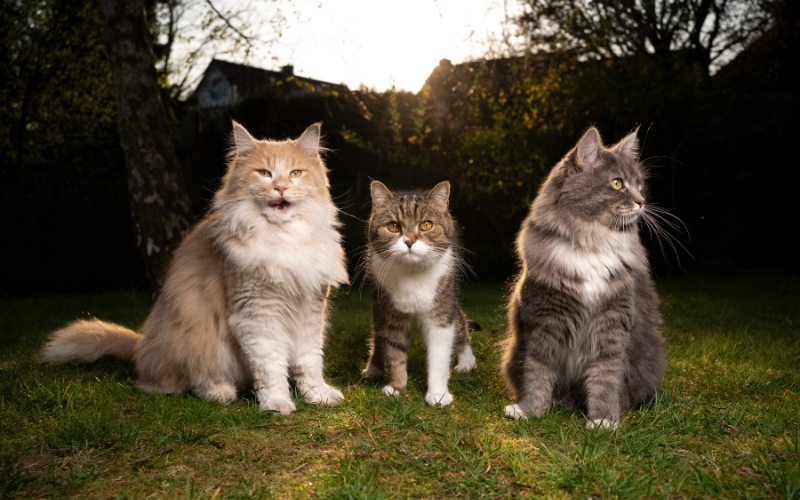
One of the largest domestic cat breeds, Maine Coons are known for their size, tufted ears, long bushy tails, and gentle personalities. They originated as working cats in the northeastern United States, particularly Maine, and their thick coats reflect that cold-climate ancestry.
Personality: Often called “gentle giants” and “dog-like.” Maine Coons are typically affectionate, social, intelligent, and adaptable. They tend to bond strongly with families and get along well with children and other pets.
Care needs: Their semi-long coat needs brushing 2-3 times per week to prevent matting, more during shedding seasons. They’re slow-growing — many Maine Coons don’t reach full size until 3-5 years old. Large breeds may benefit from extended kitten-formula feeding into their second year.
Health considerations: Like all breeds, Maine Coons have some breed-related health tendencies worth discussing with your vet, particularly around heart health screening.
Best for: Families with space, people who want an interactive and social cat, those who don’t mind regular grooming.
Ragdoll
Ragdolls are a relatively young breed, developed in California in the 1960s. They’re known for their large size, semi-long silky coats, striking blue eyes, and the famous tendency to go limp when picked up — hence the name.
Personality: Ragdolls are typically gentle, calm, affectionate, and people-oriented. They often follow their humans around the house and enjoy being held. Many Ragdolls are described as having a kitten-like personality well into adulthood.
Care needs: Their semi-long coat needs brushing 2-3 times per week. They mature slowly, reaching full size around 3-4 years old. Indoor living is strongly recommended for Ragdolls — their trusting nature makes them poorly suited to outdoor risks.
Feeding considerations: Larger Ragdolls may benefit from larger meal portions appropriate to their adult size. Most Ragdolls do well on standard adult cat food once mature, with the same nutritional principles that apply to any cat — high-quality animal protein, appropriate calorie density, AAFCO-compliant formulation.
Best for: Families who want a calm, affectionate cat. Apartment dwellers (they’re low-energy enough to do well in smaller spaces). People who don’t mind regular grooming.
Persian
One of the oldest and most recognizable breeds, Persians are known for their flat faces, long flowing coats, sweet temperaments, and calm demeanors.
Personality: Persians are typically quiet, gentle, calm, and undemanding. They often prefer serene environments and predictable routines. They’re not high-energy or demanding of attention but appreciate gentle interaction.
Care needs: Persians are high-maintenance grooming-wise. Their long coat requires daily brushing to prevent painful mats. Their flat faces also mean attention to eye cleaning — many Persians develop tear staining that needs gentle daily wiping. Grooming routines should start in kittenhood to build tolerance.
Health considerations: Flat-faced breeds can have breathing and dental considerations worth discussing with your vet.
Best for: Calm homes, people who genuinely enjoy daily grooming routines, those who want a serene companion rather than an active one.
Siamese
One of the most distinctive and recognizable cat breeds, Siamese cats have slender bodies, almond-shaped blue eyes, large ears, and the famous color-pointed coat (darker face, ears, paws, and tail with a lighter body).
Personality: Siamese cats are highly intelligent, deeply bonded to their humans, extremely vocal, and very social. They form strong attachments and often follow their people from room to room, narrating the entire experience.
Care needs: Their short coat is low-maintenance, requiring only occasional brushing. Their personalities require more — Siamese cats need substantial daily interaction and mental stimulation. They often do better with a feline companion than alone.
Best for: People who want an interactive, communicative cat. Those who are home often or work from home. Cat parents who enjoy a chatty companion.
Bengal
Bengals are a relatively new breed, developed from crossing domestic cats with Asian Leopard Cats. They have a distinctive spotted or marbled coat that genuinely looks wild, athletic bodies, and personalities to match the look.
Personality: Bengals are extraordinarily high-energy, intelligent, athletic, and curious. They often love water, climb everything, and need substantial daily enrichment. They’re not couch cats. They’re closer to a feline-shaped border collie in energy.
Care needs: Their short coat is low-maintenance. The rest of their care is high-investment. Bengals need:
- Significant daily play (multiple sessions)
- Climbing space (cat trees, wall shelves)
- Mental enrichment (puzzle feeders, training, novelty)
- Often a feline companion who can match their energy
Best for: Experienced cat parents who can commit to high engagement. Active households. People who want a cat that’s almost like having a dog in terms of interaction needs.
Not for: First-time cat owners, people who want a calm cat, those who are gone for long stretches without enrichment provided.
British Shorthair
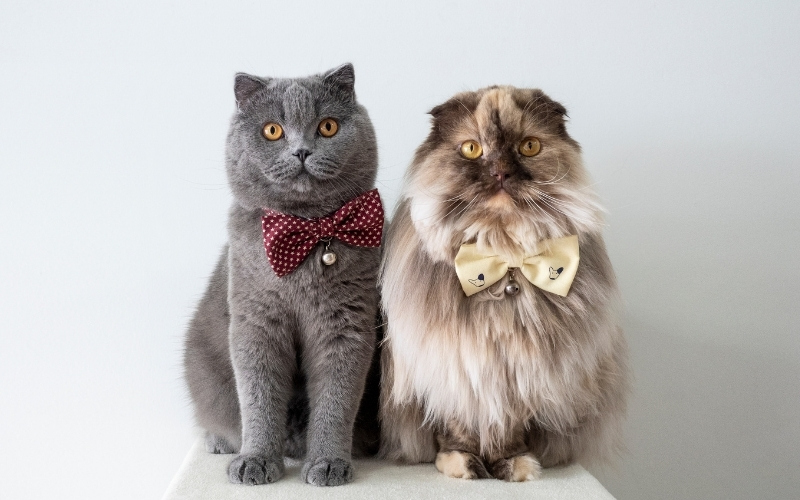
The British Shorthair is one of the oldest natural breeds, originating in Great Britain. They’re known for their round faces, plush coats, sturdy build, and notably calm temperaments.
Personality: British Shorthairs are typically calm, dignified, and somewhat reserved. They tend to be affectionate without being clingy. Many don’t enjoy being picked up or held but happily lounge near their people. They’re known for being well-adjusted and easygoing.
Care needs: Their dense coat needs brushing once or twice a week. They’re prone to gaining weight if overfed, so portion control matters. The classic “British Blue” coloring is iconic, but they come in many colors.
Feeding considerations: Like all breeds, British Shorthairs benefit from high-quality, life-stage-appropriate food. Their tendency toward weight gain means portion control is particularly important.
Best for: Quiet households, first-time cat owners, people who want a low-drama companion.
Sphynx
The Sphynx is the most recognizable hairless cat breed. They appear bald, though they actually have a fine downy fuzz over their skin. They have wrinkled bodies, large ears, and intense personalities.
Personality: Sphynx cats are extraordinarily social, affectionate, and people-oriented. They often act more like little companions than typical cats. They’re warm to the touch (slightly higher body temperature) and seek out body heat and contact.
Care needs: Sphynx care is unique among cat breeds. Despite the lack of fur, they’re more maintenance, not less:
- Regular bathing (typically weekly) to remove skin oils that would normally be absorbed by fur
- Skin care attention (sunburn risk, cold sensitivity)
- Ear cleaning more frequently than furred breeds (no ear fur to filter debris)
- Indoor living essential — they don’t have fur protection from elements
- Often need sweaters in cold homes
Best for: Experienced cat parents who want an extraordinarily affectionate cat and don’t mind the bathing routine. People with allergies sometimes do better with Sphynx, though they’re not truly hypoallergenic.
Russian Blue
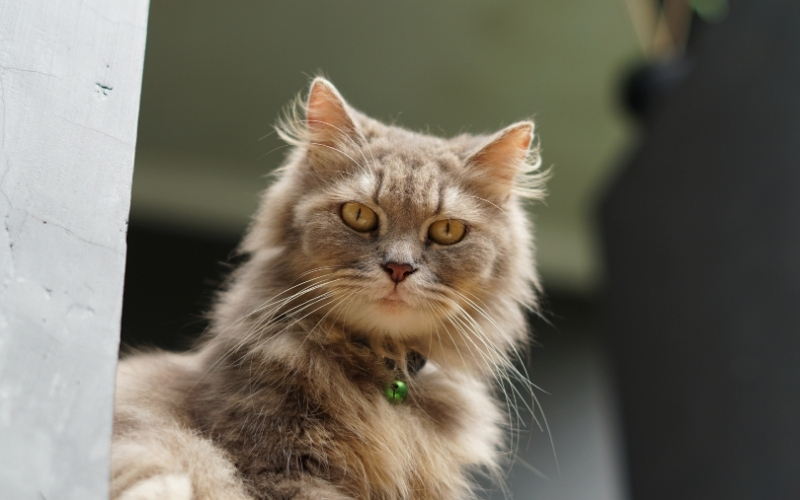
Russian Blues are an elegant, dignified breed known for their plush blue-gray coats, brilliant green eyes, and reserved personalities.
Personality: Typically gentle, quiet, and somewhat reserved. Russian Blues bond deeply with their families but are often shy with strangers. They appreciate routine and prefer calm environments.
Care needs: Their dense double coat is relatively low-maintenance, requiring brushing once or twice a week. They’re generally healthy and adaptable to most living situations.
Best for: Quieter households, single-person homes or small families, people who appreciate a more reserved cat.
Scottish Fold
Scottish Folds are recognizable by their distinctive folded ears, which result from a genetic mutation. They have round faces, sweet expressions, and gentle personalities.
Personality: Scottish Folds are typically calm, affectionate, and adaptable. They’re often described as “owl-like” in appearance and “quiet” in temperament.
Care needs: Their coat varies by variety (Scottish Folds come in shorthair and longhair). Standard grooming applies. Conversations with your vet about breed-specific considerations are important when adopting any breed, including this one.
Best for: Quiet households, people who want a calm and gentle cat.
Norwegian Forest Cat
Often called “Wegies,” Norwegian Forest Cats are a large, sturdy breed with thick double coats, originally adapted to the cold Scandinavian climate.
Personality: Norwegian Forest Cats are typically affectionate but independent. They’re intelligent, calm, and adaptable, often described as having a balanced temperament.
Care needs: Their thick double coat needs brushing 2-3 times per week, more during shedding seasons. They tend to mature slowly, similar to Maine Coons.
Best for: Families who want a large, affectionate but independent cat. People who don’t mind regular grooming.
Abyssinian
Abyssinians are slender, athletic cats with a distinctive ticked coat (each hair has multiple bands of color). They’re one of the oldest known cat breeds.
Personality: Abyssinians are typically active, curious, intelligent, and engaged with everything around them. They want to participate in whatever you’re doing. They’re playful well into adulthood.
Care needs: Their short coat is low-maintenance. Their energy is high-maintenance. They need substantial daily play, mental stimulation, and often a feline companion.
Best for: Active households, people who want an engaged interactive cat, those who can provide enrichment.
American Shorthair
One of America’s most beloved native breeds, American Shorthairs are descendants of cats brought over on early European ships. They’re medium-sized, sturdy, and known for their friendly dispositions.
Personality: American Shorthairs are typically friendly, easygoing, and adaptable. They’re good with families, children, and other pets. They have moderate energy levels and aren’t excessively demanding.
Care needs: Their short coat needs minimal grooming. They’re generally healthy and adaptable to many living situations.
Best for: Families, first-time cat owners, people who want an easygoing companion.
Devon Rex and Cornish Rex
Both Rex breeds have curly or wavy coats due to genetic mutations. Devon Rex have shorter, looser curls; Cornish Rex have tighter, wavy coats.
Personality: Both breeds are typically playful, social, and active. They’re often described as having dog-like personalities, with significant energy and people-orientation.
Care needs: Their unusual coats need gentle care — too much brushing can damage them. They tend to feel warm to the touch and may seek out body heat.
Best for: Interactive households, people who want an unusual-looking cat with a playful personality.
Mixed Breeds and Common Coat Patterns
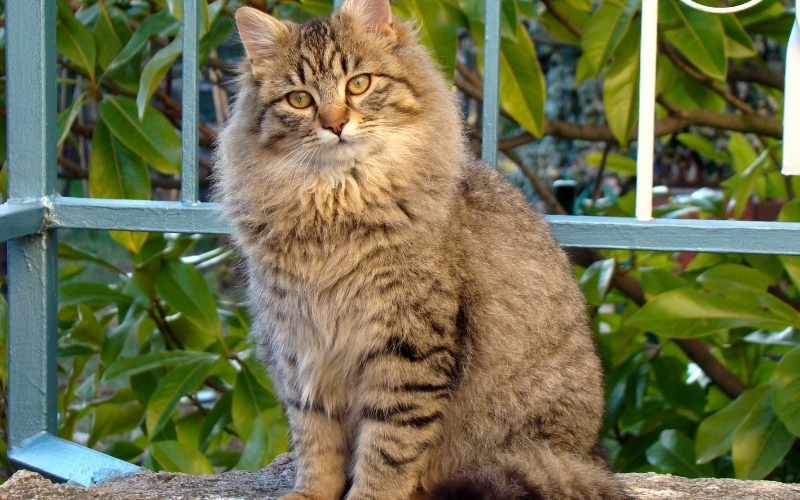
Most cats in the United States aren’t purebred. They’re Domestic Shorthairs or Domestic Longhairs — beautiful mixes that come in every color, pattern, and personality. These cats deserve their own section because they’re the majority of pet cats, and they’re wonderful.
Domestic Shorthair vs. Purebred
A Domestic Shorthair (DSH) isn’t a breed in the strict sense — it’s a designation for non-pedigreed shorthaired cats. Same for Domestic Longhair (DLH). These cats can have ancestry from many breeds or no recognized breed at all.
Mixed-breed cats often have notable advantages:
- Genetic diversity that may reduce some breed-specific health tendencies
- Wider personality range since they’re not bred for specific temperaments
- Lower cost through shelter adoption
- Just as much love to give as any pedigreed cat
The mythology that purebred cats are somehow “better” than mixed breeds isn’t supported by anything meaningful. Mixed-breed cats are wonderful pets and often easier to find through shelter adoption.
Coat Patterns Aren’t Breeds
This trips up many people. Terms like “tabby,” “calico,” “tortoiseshell,” and “tuxedo” describe coat patterns, not breeds.
Tabby is a pattern characterized by striped, swirled, spotted, or ticked coats with the classic “M” marking on the forehead. Many breeds come in tabby patterns. Tabby is the most common coat pattern among cats worldwide.
Calico refers to cats with a tri-color coat pattern of white, black, and orange. Calico is almost exclusively female due to the genetics involved.
Tortoiseshell (“tortie”) refers to a coat pattern of black and orange (or their dilute versions) without white. Like calicos, torties are almost always female.
Tuxedo describes a cat with a primarily black coat and white markings resembling formal wear.
Pointed refers to coats with darker coloring on the face, ears, paws, and tail (like Siamese pointing).
A cat can be a tabby Maine Coon, a calico Domestic Shorthair, or a tortoiseshell Persian. The pattern and the breed are separate categories.
Personality in Mixed-Breed Cats
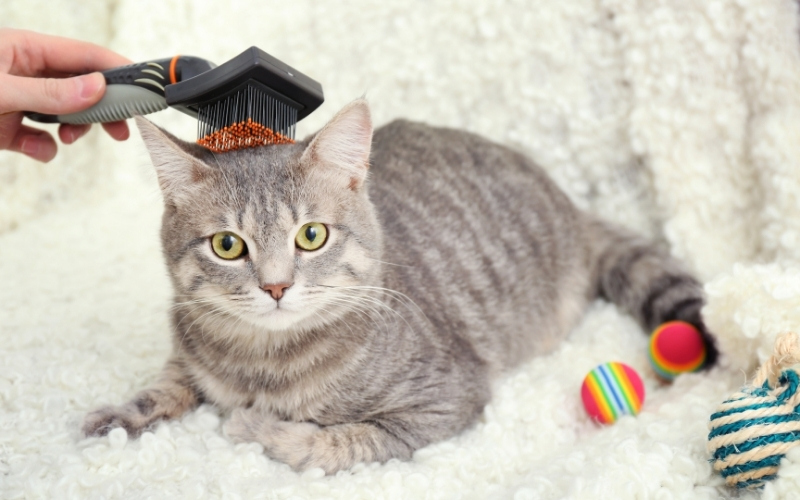
Without a purebred lineage shaping temperament, mixed-breed cats display the full range of cat personalities. Some are bold, some are shy. Some are vocal, some are silent. Some are athletic, some are champion nappers.
The benefit of adopting a mixed-breed adult cat is that their personality is already established. You can see what you’re getting in a way that’s harder with kittens (purebred or not). Shelters often know their cats well after intake assessments.
How to Find Out Your Cat’s Breed
This is one of the most common questions cat parents have, especially after adopting a mystery shelter cat. The honest answers vary by how curious you are and how much certainty you want.
Visual Identification
You can make educated guesses about your cat’s breed background based on physical features:
- Coat length and texture — long, short, dense, fine
- Body type — slender, muscular, cobby, lithe
- Face shape — round, wedge-shaped, flat
- Ear shape and size — large, small, folded, tufted
- Eye shape and color — round, almond, blue, green, gold
- Tail length and shape — long, short, bobtailed
- Coat pattern and color
A cat with a wedge-shaped face, slender body, and pointed coloring likely has Siamese ancestry. A massive long-haired cat with tufted ears and a bushy tail might have Maine Coon in the family. A small cat with curly fur is probably part Rex.
But visual ID has limits. Many mixed-breed cats look like they could be related to several breeds, and appearance alone doesn’t confirm lineage.
Cat DNA Tests
DNA testing for cats has improved significantly in recent years. Companies like Basepaws offer at-home test kits that analyze your cat’s genetic background and provide breed composition information.
How they work:
- Collect a cheek swab from your cat
- Mail it in
- Receive a report breaking down ancestral breed contributions
DNA tests are most useful when you genuinely want to know your cat’s background. They’re also surprisingly fun for cat enthusiasts. Some tests also screen for genetic health markers, which can be useful information to share with your vet.
Limitations:
- Results aren’t always definitive
- Many mixed-breed cats show broad ancestral mixes rather than clear breed identification
- The science is still evolving
- They cost money (typically $100-$200)
For most cat parents, a DNA test isn’t necessary. But for those curious about their mystery cat’s background, it’s a reasonable option.
When Breed Identification Doesn’t Really Matter
For most everyday cat care, knowing your cat’s exact breed background doesn’t change much. Care fundamentals are similar across breeds:
- Quality nutrition
- Appropriate veterinary care
- Mental and physical enrichment
- Clean environment
- Consistent routines
Breed information helps with specific things — anticipating grooming needs, understanding temperament tendencies, knowing about breed-related health considerations to discuss with your vet. But your cat is your cat. They’ll show you who they are over time, breed certificate or not.
Choosing the Right Cat Breed for You
If you’re considering bringing home a specific breed, matching the breed’s tendencies to your lifestyle prevents most “wrong fit” situations.
Questions Worth Asking Yourself
How much daily attention can you give a cat? Highly social breeds like Burmese, Siamese, and Sphynx don’t do well alone for long stretches. More independent breeds like British Shorthairs, Russian Blues, and Persians handle solitude better.
How active is your household? High-energy breeds like Bengals and Abyssinians thrive in active homes with lots of engagement. Calmer breeds suit quieter households.
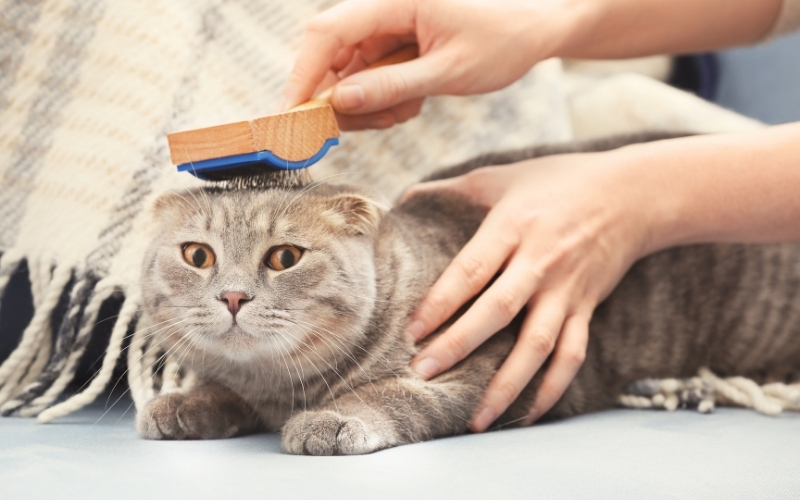
How much grooming time can you commit to? Long-haired breeds (Persians, Maine Coons, Ragdolls, Norwegian Forest Cats) need real grooming routines. Short-haired breeds need much less.
What’s your living space like? Apartments work well for many breeds, but very active breeds may struggle without enough space and stimulation. Larger breeds need physical room.
Do you have other pets? Some breeds are notably social with other cats and dogs (Ragdolls, Maine Coons, Burmese). Others prefer being the only pet (some Persians, some Russian Blues).
Do you have children? Some breeds are notably patient and tolerant with children (Ragdolls, Maine Coons, American Shorthairs, British Shorthairs). Others may be too easily overwhelmed.
Are you a first-time cat owner? Easygoing, well-adjusted breeds like American Shorthairs, British Shorthairs, Ragdolls, and Maine Coons suit beginners well. High-maintenance breeds like Bengals or Sphynx are often better for experienced cat parents.
Best Breeds for Common Situations
Best for apartments: British Shorthair, Ragdoll, Persian, Russian Blue, Scottish Fold
Best for families with kids: Ragdoll, Maine Coon, American Shorthair, British Shorthair, Birman
Best for first-time owners: American Shorthair, British Shorthair, Ragdoll, Maine Coon
Best for low-maintenance grooming: American Shorthair, British Shorthair, Russian Blue, Bengal, Abyssinian
Best for quiet households: Russian Blue, British Shorthair, Persian, Chartreux, Norwegian Forest Cat
Best for active engagement: Bengal, Abyssinian, Oriental Shorthair, Devon Rex, Siamese
Best for affectionate companionship: Ragdoll, Maine Coon, Burmese, Sphynx, Siamese
The Honest Truth About “Hypoallergenic” Breeds
A common question is whether certain breeds are hypoallergenic. The honest answer is: no breed is truly hypoallergenic. Some breeds (Sphynx, Siberian, Russian Blue, Balinese, certain Rex varieties) produce less of the protein (Fel d 1) that triggers most cat allergies. Some allergy sufferers tolerate these breeds better than others.
If allergies are a concern:
- Spend significant time with the breed before committing
- Visit catteries or homes with that breed
- Remember that individual cats vary even within a breed
- Don’t assume “hypoallergenic” means symptom-free
Where to Find Specific Breeds
If you’re looking for a specific breed, you have a few options:
Breed-specific rescues exist for many popular breeds and are often overlooked. Maine Coon rescues, Siamese rescues, Bengal rescues, Persian rescues — they all exist, and they typically have purebred or near-purebred cats needing homes.
Reputable breeders can provide kittens with known background and health screening. Avoid backyard breeders, kitten mills, and pet stores. Reputable breeders genuinely care about their cats, screen for health issues, ask questions about you, and don’t pressure sales.
Mixed-breed cats with breed traits are common at shelters. You can often find cats with significant Siamese, Maine Coon, or Persian ancestry through standard adoption channels at much lower cost than purebred sources.
A Few Truths About Living With Different Breeds
A handful of things worth knowing as you explore the world of cat breeds:
Breed is a starting point, not a personality contract. The shy Bengal exists. The chatty British Shorthair exists. Use breed information as a guide, then let your individual cat be themselves.
Mixed-breed cats are not “lesser.” Often they’re healthier, more adaptable, and just as loving as any purebred. Shelter cats deserve serious consideration in any cat search.
Long-haired cats need real grooming commitment. Daily for Persians, several times weekly for Maine Coons and Ragdolls. Be honest with yourself about whether you’ll actually do this before adopting a long-haired breed.
High-energy breeds need real enrichment. A Bengal in a small apartment with no engagement is a recipe for behavior problems. Match breed energy to your actual lifestyle, not your aspirational one.
Some breeds have known health considerations. Discuss breed-specific topics with your vet when bringing home any breed. Annual vet visits matter especially for breeds with known tendencies.
Cats live a long time. The breed you choose at year one will be the cat you live with at year fifteen or longer. Pick for the long haul, not just the kitten phase.
And finally — every cat, purebred or mixed, deserves the same fundamentals: quality nutrition, attentive care, enrichment, love, and a vet relationship. The breed shapes some preferences. The care shapes the cat.
The Breed Choice Mindset
If everything in this guide compressed into a few principles, it would be these:
Choose the breed that fits your real life, not your fantasy life. The cat you actually have time for is the cat who’ll thrive in your home.
Mixed-breed cats are wonderful. Don’t overlook them. The shelter has incredible cats waiting.
Read about breed tendencies, then trust your individual cat to be themselves. Generalizations are useful starting points, never the final word.
Match energy levels honestly. Active breeds need active homes. Calm breeds need calmer homes. Mismatches create stress for everyone.
Grooming commitment matters. Long-haired breeds aren’t decorations — they’re daily care commitments. Be honest about what you’ll maintain.
Talk to your vet about breed-related considerations. Different breeds have different things worth monitoring across their lives.
Adopt when you can. Rescues have purebreds too, more than people realize. Look there first.
The cat you choose will be part of your life for fifteen years or more. The right match — by personality, energy, grooming needs, and lifestyle fit — is worth taking time to find. Whether that ends up being a Bengal, a Persian, a Maine Coon, or a glorious mystery tabby from your local shelter, the right cat for your home is the one whose needs you can genuinely meet.